
In 2026, choosing between Debian and Fedora is no longer just a beginner's question. It's a strategic decision that shapes how your system evolves over time. Your choice affects upgrade frequency, security updates, hardware support, and even your development workflow. Whether you are looking for the best Linux distros for personal use or enterprise infrastructure, understanding these two giants is essential.
Debian and Fedora follow two different philosophies. Debian prioritizes stability, predictability, and long-term reliability. It changes slowly and focuses on keeping systems consistent and dependable. This makes it a top candidate for anyone looking to buy VPS hosting with a "set it and forget it" mindset.
Fedora takes the opposite approach. It embraces innovation, ships new technologies quickly, and delivers the latest kernels, desktop environments, and developer tools. It's built for users who prefer staying current and testing the future of Linux today.
If you're deciding between Debian and Fedora for desktop, server, or development use in 2026, understanding their differences in release cycles, package management (APT vs DNF), security strategy, and ecosystem direction will help you choose the one that fits your goals.
🚀 Overview of Debian in 2026
🔹 Philosophy and Ecosystem
In 2026, Debian remains one of the most influential Linux distributions. It is entirely community-driven and continues to serve as the foundation for Ubuntu, Linux Mint, and many cloud-focused distributions. Its governance model emphasizes openness, transparency, and long-term sustainability. Because of its massive influence, it is often the first choice for a what is a Linux server discussion in academic and professional circles.
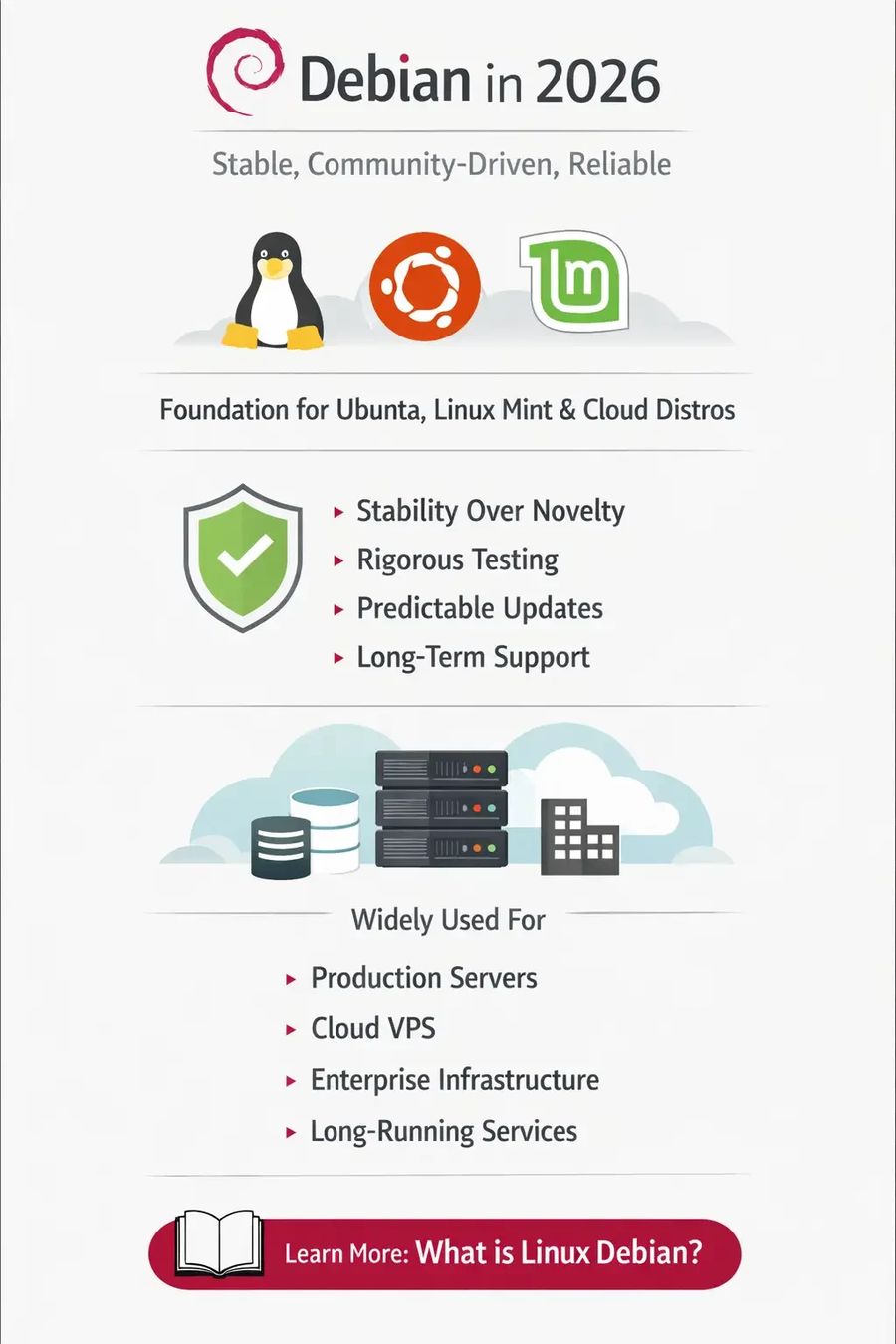
Debian's core principle has not changed: stability over novelty. Rather than prioritizing the newest features, it focuses on rigorous testing, predictable updates, and long-term reliability. This philosophy ensures that once a version reaches the "Stable" tag, it is as bug-free as possible.
Because of this approach, Debian Stable is widely used in production servers, cloud VPS deployments, enterprise backend infrastructure, and other long-running services where minimal disruption is critical. Many experts recommend it when you need to secure your VPS because the attack surface remains predictable over years.
Want to understand Debian from the ground up? Read our comprehensive breakdown of What is Linux Debian.
📅 Debian Release Cycle and Support Model
Debian continues to follow its well-known three-branch development model: Stable, Testing, and Unstable. Each branch serves a different purpose. Stable is built for reliability and production use. Testing acts as the proving ground for the next release. Unstable (often called Sid) is where active development happens and new packages first appear.
A new Stable version is typically released every two years. Once released, it receives around five years of support through a combination of standard security updates and Long-Term Support (LTS). This predictable lifecycle gives businesses and administrators the confidence to plan infrastructure decisions well in advance, especially when managing a Linux dedicated server fleet.
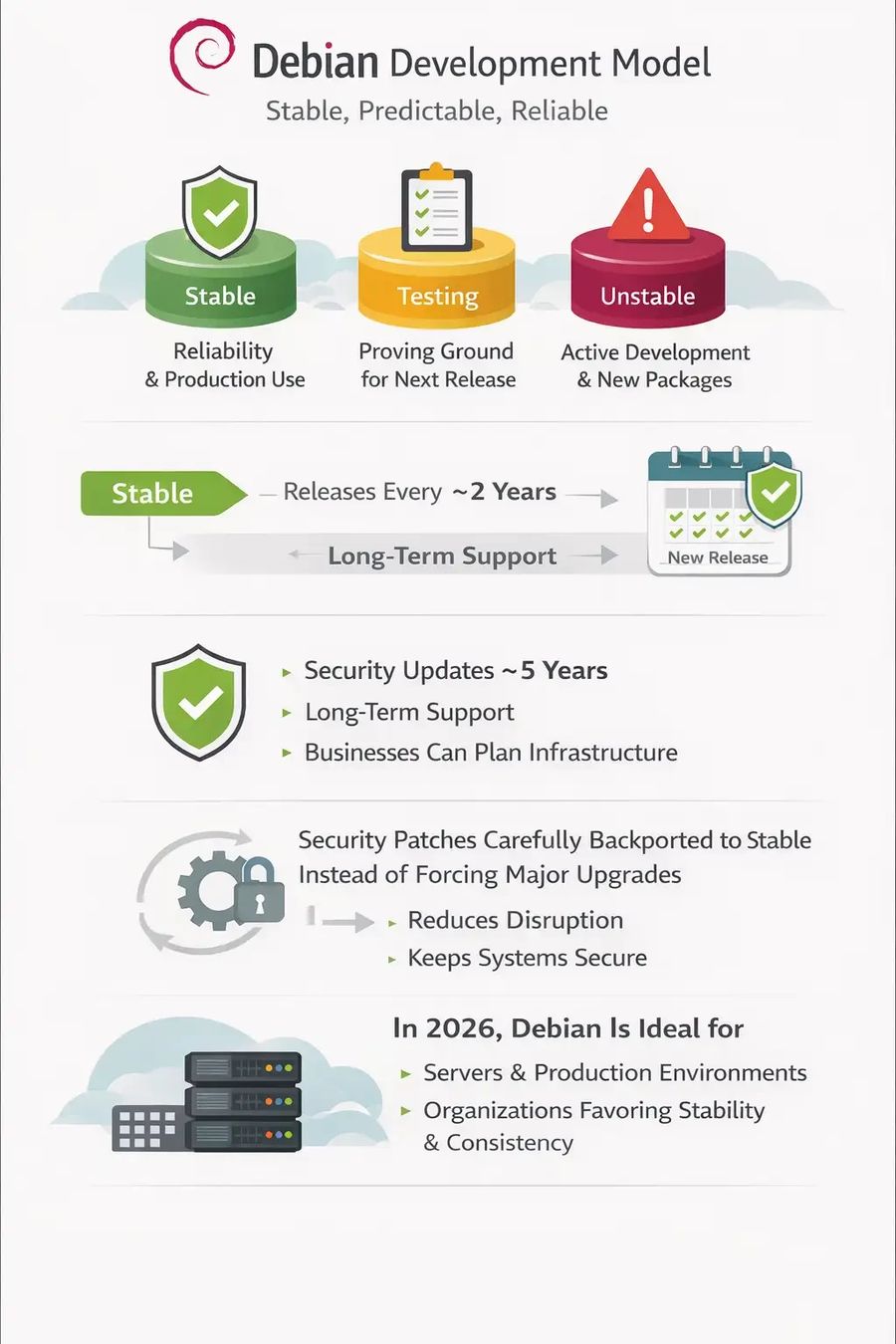
In 2026, Debian remains one of the strongest options for organizations that value consistency over constant change. Its measured release cadence and conservative approach make it ideal for production environments where downtime and unexpected behavior simply aren't acceptable.
Security patches are carefully backported to the existing Stable versions instead of forcing major upgrades. That means systems stay secure without the disruption of jumping to entirely new software versions, significantly reducing operational risk in live environments. This is a primary reason why Debian is a top-tier choice for VDS hosting where resource isolation and stability are paramount.
📦 Package Management: APT in 2026
Debian uses APT (Advanced Package Tool) with .deb packages. It is known for its efficiency and the massive size of its official repositories.
Typical workflow for maintaining a Debian system:
sudo apt update (Updates the local index of packages)
sudo apt upgrade (Installs available updates for existing packages)
sudo apt install package-name (Downloads and installs a specific software)
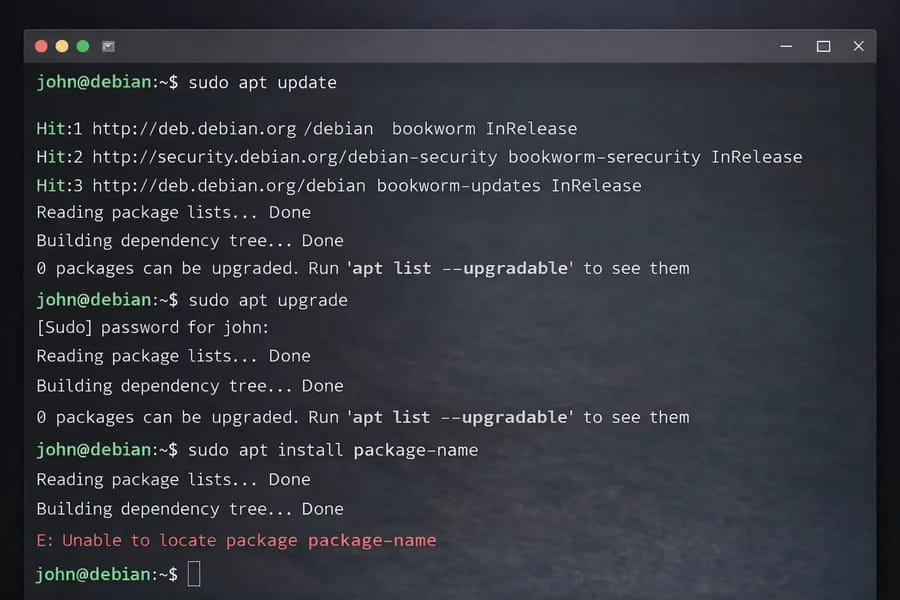
APT continues to be one of Debian's strongest assets. It's mature, stable, and incredibly dependable in production environments. While Debian Stable doesn't always ship the very latest upstream versions, every package goes through extensive testing before release. That tradeoff favors reliability over novelty, which is exactly what many system administrators prefer. If you encounter issues, you can refer to our complete guide on the apt-get command.
This stability doesn't come at the cost of modern compatibility. Debian fits naturally into today's infrastructure stacks and works seamlessly with container runtimes like Docker. It also runs smoothly inside Kubernetes clusters, making it a dependable base for orchestrated workloads. For developers, this means Docker VPS hosting on Debian is often the most stable path for microservices.
Provisioning is straightforward with tools like cloud-init, and Debian integrates cleanly into automated CI/CD pipelines. Whether you're deploying containers, managing clusters, or automating builds, Debian remains flexible enough to support modern workflows while keeping its core promise of stability.
💡 Overview of Fedora in 2026
⚡ Innovation-Driven Development
Fedora continues to serve as the upstream innovation platform for Red Hat Enterprise Linux (RHEL). Many of the technologies that later become standard in enterprise environments are first introduced, tested, and refined within Fedora. This makes it a fast-moving distribution that often sets the direction for the broader Linux ecosystem. It is the playground where the what is Linux kernel evolution actually happens in real-time.
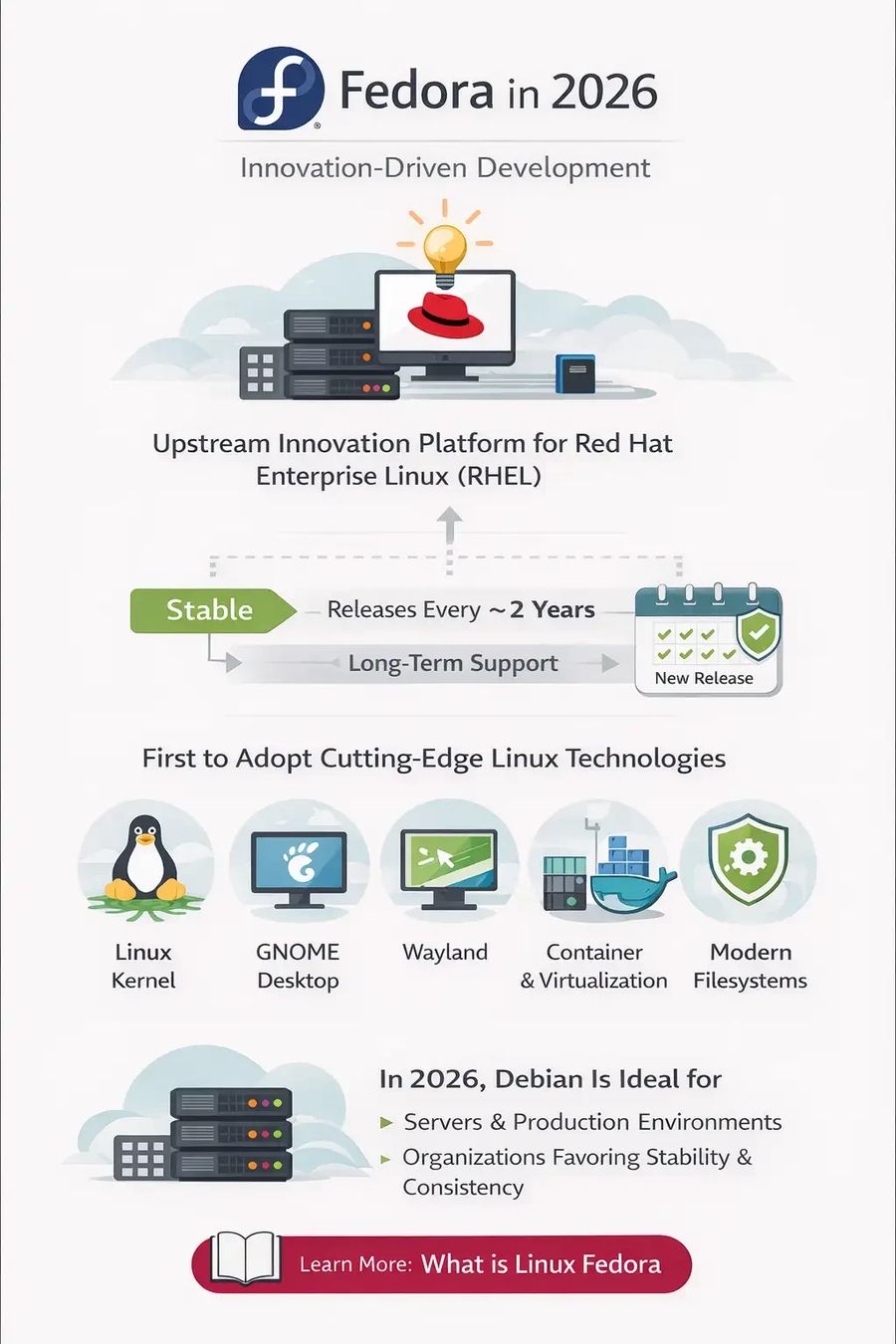
In 2026, Fedora is still among the first to adopt major Linux kernel releases, the latest GNOME desktop updates, and ongoing Wayland improvements. It also moves quickly when it comes to container tooling, virtualization enhancements, and modern filesystem technologies like Btrfs by default. If a new feature is shaping the future of Linux, there's a good chance Fedora is already running it.
This forward-looking approach makes Fedora especially attractive to developers, power users, and anyone who wants early access to cutting-edge capabilities. At the same time, it maintains a strong level of polish and usability despite its rapid release cycle. For those looking for high-performance workstations, Fedora on SSD VPS provides an incredibly snappy experience.
For a deeper look at its architecture, release model, and use cases, read our complete guide on What is Linux Fedora
🔄 Fedora Release Model and Lifecycle
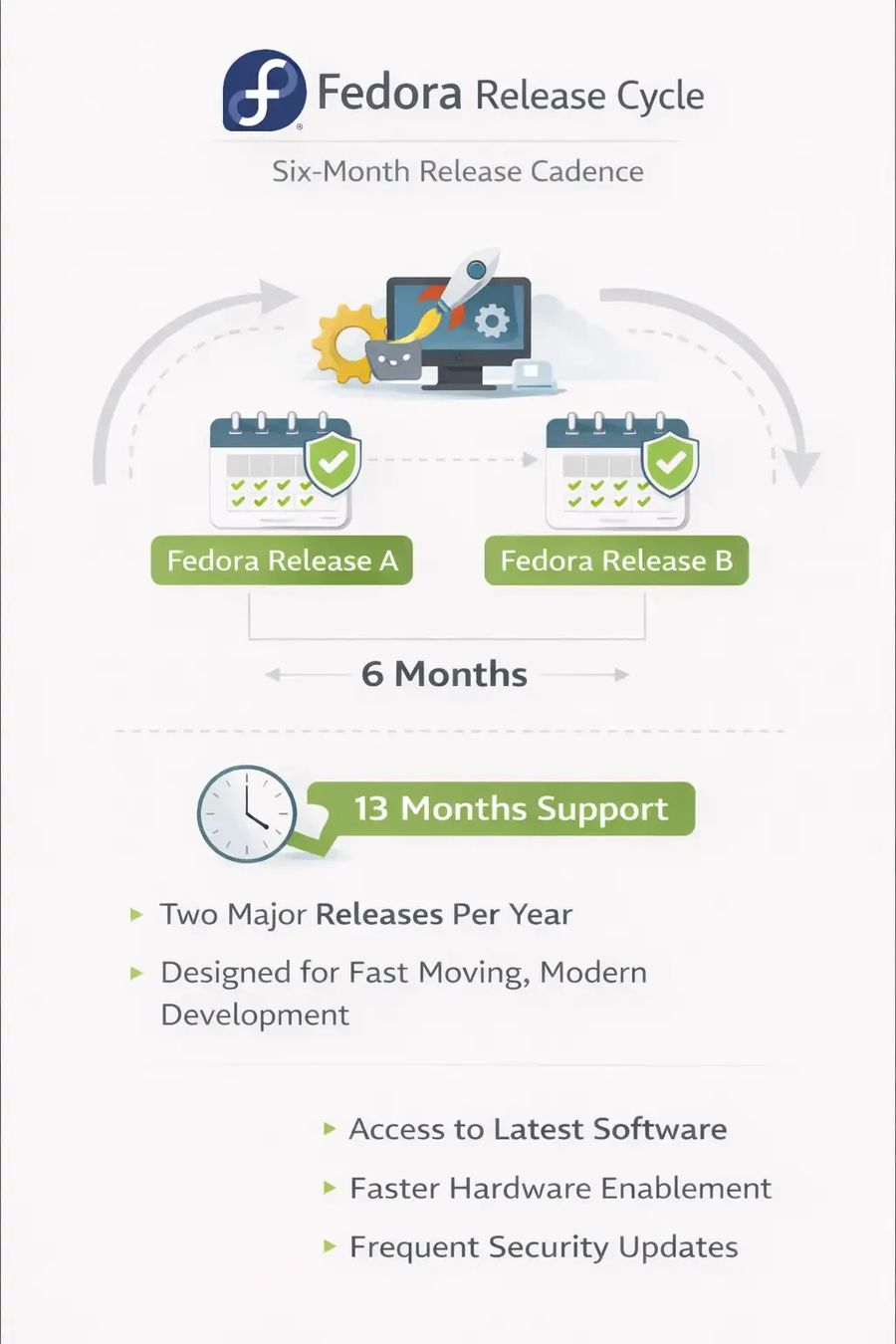
Fedora follows a rapid six-month release cycle, which keeps the distribution moving forward at a steady pace. This predictable schedule means users can expect two major releases each year, each bringing noticeable improvements and updated components across the system. It's a stark contrast to distributions like CentOS (in its traditional form), which focused on much longer cycles.
Every Fedora version is supported for approximately 13 months. In practice, this means users need to upgrade at least once a year to remain on a supported release. For many developers and tech-forward teams, this isn't a drawback—it's part of the appeal. It ensures that the system doesn't accumulate "technical debt" from ancient software versions.
This fast cadence ensures access to cutting-edge software, quicker hardware enablement, and up-to-date security patches. It also provides modern development toolchains that align closely with current industry standards, making Fedora especially attractive for development environments and testing new technologies.
That said, the model does require comfort with regular system upgrades. Organizations or users who prefer long-term stability with minimal change may find the frequent upgrade cycle demanding, while those who value innovation will see it as a clear advantage. If you prefer a more stable RHEL-based alternative, you might look into AlmaLinux VPS options instead.
🛠️ Package Management: DNF in 2026
Fedora uses DNF (Dandified YUM) with .rpm packages. DNF is the successor to YUM and offers better performance and lower memory usage.
Example commands for Fedora users:
sudo dnf upgrade (Updates all system packages to the latest versions)
sudo dnf install package-name (Installs a package from the Fedora repositories)
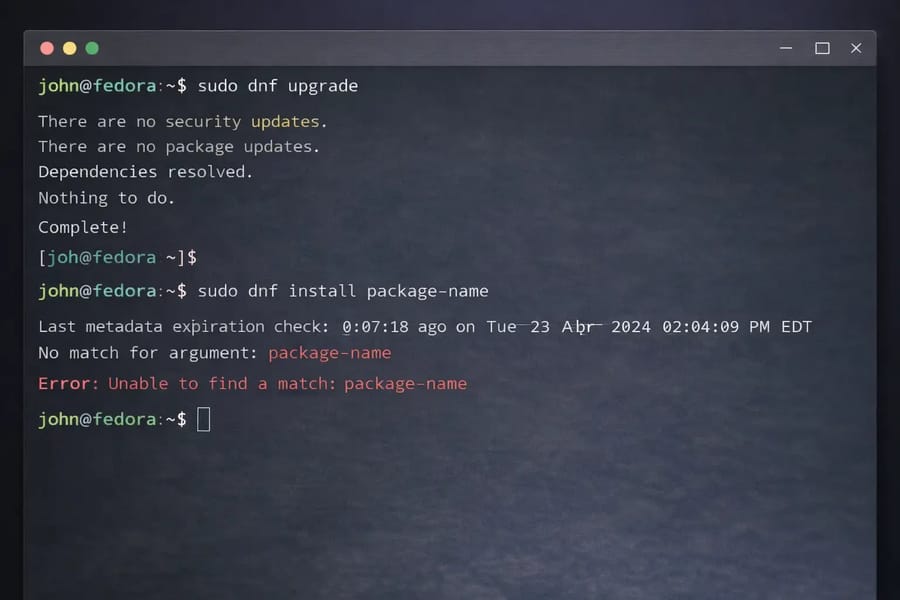
DNF provides powerful dependency resolution and a clean, predictable package management experience. It handles complex package relationships efficiently and integrates tightly with enterprise-grade tooling across the Red Hat ecosystem. For administrators managing multiple systems, that consistency makes automation and large-scale deployments much easier. It is very similar in logic to the tools used in CentOS server administration.
Fedora also places strong emphasis on modular repositories. This allows users to choose different versions of software streams (like different versions of Python or Node.js) without disrupting the entire system, offering flexibility while maintaining structure. It's especially useful for development teams that need specific runtime versions.
On top of that, Fedora's focus on container-based workflows fits naturally into modern DevOps practices. Whether you're building container images, testing microservices, or deploying across orchestrated environments, Fedora is designed to support those workflows from the ground up. This makes it an excellent choice for a server for Docker in a development context.
⚖️ Debian vs Fedora: Core Differences in 2026
The following table summarizes the primary technical and philosophical differences between these two distributions:
| Category | Debian | Fedora |
| Release Cycle | ~2 years | ~6 months |
| Support Length | ~5 years (LTS) | ~13 months |
| Software Freshness | Conservative (Stable) | Cutting edge (Up-to-date) |
| Ideal For | Servers, VPS & Stability | Developers & Modern Desktops |
| Package Manager | APT (.deb) | DNF (.rpm) |
| Security Approach | Backported security fixes | Fast integration of new features |
| Enterprise Role | Base for Ubuntu/Mint | Upstream for RHEL |
The key difference in 2026 is still philosophical at its core. Debian is built around stability. Every decision in its release process prioritizes reliability, predictability, and long-term consistency. It's designed for environments where uptime matters more than having the newest features. This makes it the king of unmanaged VPS hosting where the user wants a rock-solid foundation.
Fedora, on the other hand, is driven by innovation. It moves quickly, adopts new technologies early, and isn't afraid to push the ecosystem forward. For users who want access to the latest advancements in the Linux world, that forward momentum is a major advantage.
In simple terms, Debian focuses on minimizing change, while Fedora embraces it. The right choice depends less on which distribution is "better" and more on whether you value long-term stability or rapid evolution.
🛡️ Stability vs Innovation in 2026 Infrastructure
This is where real-world use cases start to matter more than technical specs. The choice often depends on your specific VPS uses and use cases.
Debian is commonly deployed in VPS hosting environments, web hosting stacks, and database servers where reliability is critical. It's also a strong choice for infrastructure nodes that simply can't afford unexpected downtime. Because Debian moves slowly and avoids unnecessary change, administrators can run production systems with confidence and fewer surprises. This is why it's frequently used for managed VPS solutions where stability is a service guarantee.
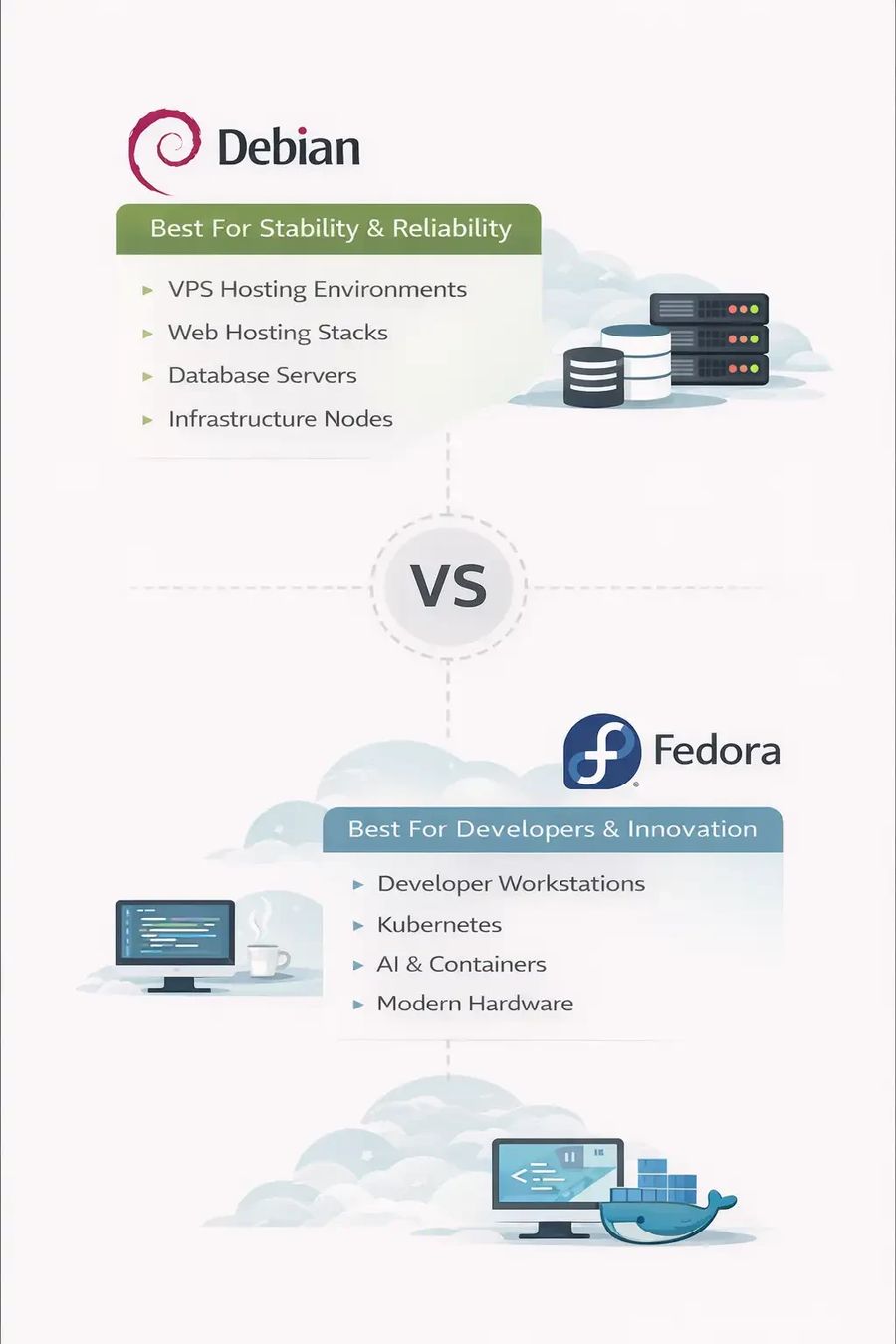
That conservative approach pays off in environments where consistency is more important than having the latest features. Fewer disruptive updates mean fewer compatibility concerns and a lower chance of something breaking unexpectedly. For mission-critical tasks, many prefer a managed dedicated server running Debian for ultimate peace of mind.
Fedora, by contrast, is often selected for developer workstations and Kubernetes development environments. It's popular among teams experimenting with AI workloads, containers, and modern tooling. Since Fedora adopts new technologies quickly, it's ideal for testing and early adoption scenarios. It is effectively a preview of what will eventually arrive on a unmanaged dedicated server running RHEL or AlmaLinux.
Its faster kernel updates can also improve compatibility with newer hardware. For developers working with the latest CPUs, GPUs, or laptops, that quicker hardware support can make a noticeable difference in their daily productivity.
🖥️ Installation and User Experience
Debian's installer continues to be flexible and highly configurable. It gives users detailed control over partitioning, package selection, desktop environments, and core system components. For advanced users and system administrators, that level of granularity is a major advantage. You can shape the system exactly the way you want it from the very beginning. This granular control is essential when setting up virtual machine hosting from scratch.
Fedora takes a different approach. Its graphical installer (Anaconda) is streamlined and user-friendly, designed to get you up and running quickly. The default GNOME experience feels polished and cohesive, and hardware detection is typically fast and reliable especially on newer machines. If you are new to Linux, we recommend starting with how to use Linux guide to get familiar with the basics.
For desktop-first users in 2026, Fedora often feels more modern right out of the box. The design, responsiveness, and newer software stack create a smoother initial experience for those who need a high-end Linux workstation.
For infrastructure-focused users, however, Debian offers more predictable control. Its deliberate pace and configurable setup make it better suited for environments where stability and long-term consistency matter most. This is particularly true for Debian VPS server users who prioritize uptime above all else.
🔒 Security and System Hardening
Debian takes a conservative approach to security maintenance. Instead of upgrading entire packages to newer upstream versions, it backports critical security patches into the existing stable releases. This reduces the risk of introducing unexpected changes while keeping systems protected. For production environments, that predictability can be just as important as the patches themselves. It is a cornerstone of Linux server security best practices.
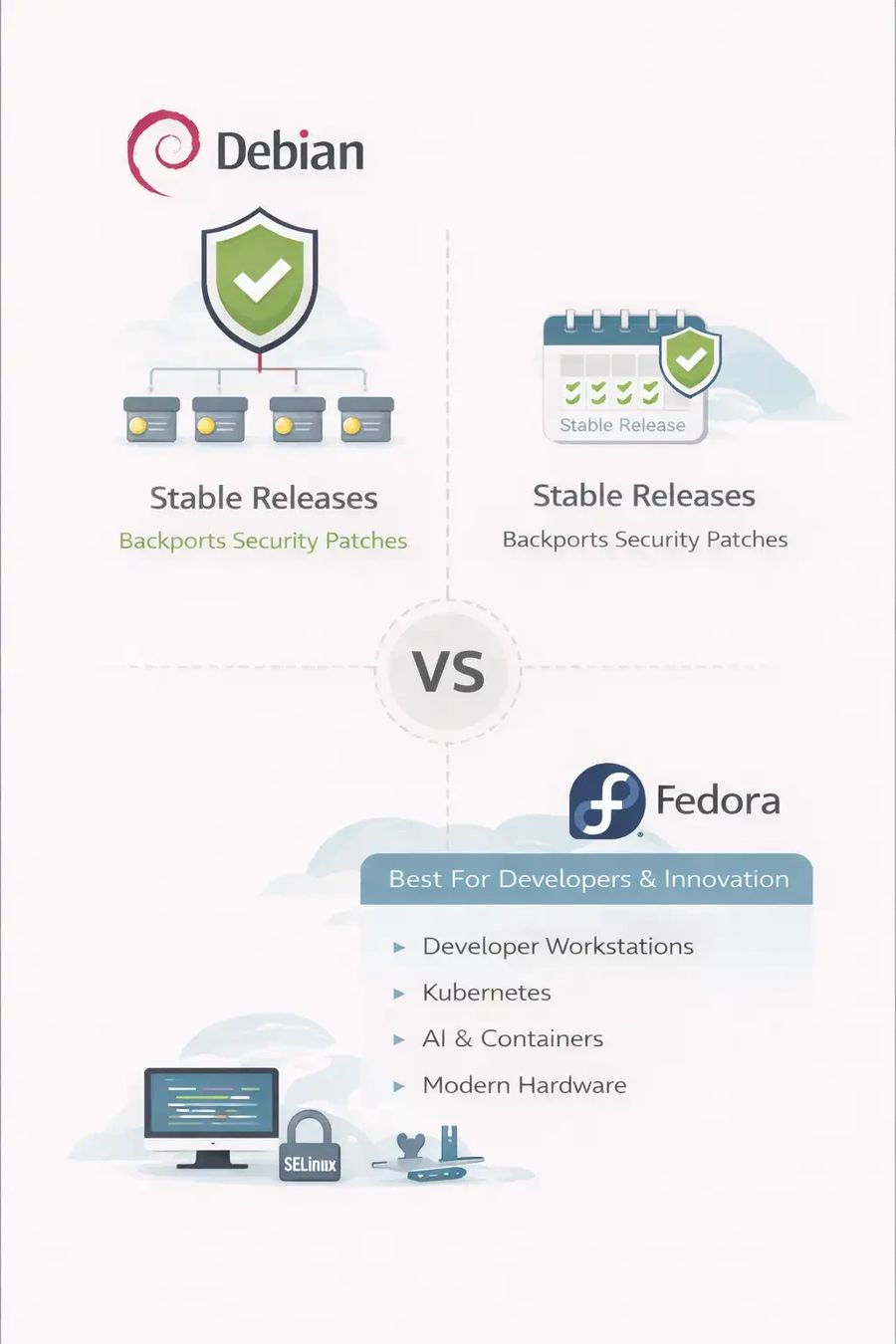
Fedora approaches security from a more forward-looking angle. SELinux (Security-Enhanced Linux) is enabled by default, and the distribution is quick to adopt modern security frameworks and enhancements. New hardening features, updated cryptographic standards, and evolving security tooling often appear in Fedora before they reach more conservative distributions.
If your priority is long-term security consistency with minimal disruption, Debian is hard to beat. If you prefer access to the latest security architecture and proactive hardening features, Fedora may have the edge. In both cases, using tools like SSH correctly is vital for maintaining a secure access point.
📂 Use Case Breakdown
For servers and VPS deployments, Debian continues to be a dominant choice in 2026. Its long-term support cycle and conservative update policy make it especially well-suited for production environments where stability is non-negotiable. Hosting providers and infrastructure teams rely on Debian because it minimizes unexpected changes while maintaining strong security standards. Many users choose it for cheap VPS solutions because it runs efficiently even on lower hardware specs.
For deeper comparisons with other popular distributions, you may also want to read Debian vs CentOS and Debian vs Arch to better understand how Debian stacks up across different use cases.
💻 For Developers
For developers, Fedora is often the go-to choice—especially for those who prefer working with the latest tools and technologies. Its rapid release cycle ensures access to new compilers, updated language runtimes (like the latest versions of Python, Ruby, or Go), and modern container-native tooling without long delays. If you are building high-scale apps, a best VPS for developers often comes pre-configured with these modern stacks.
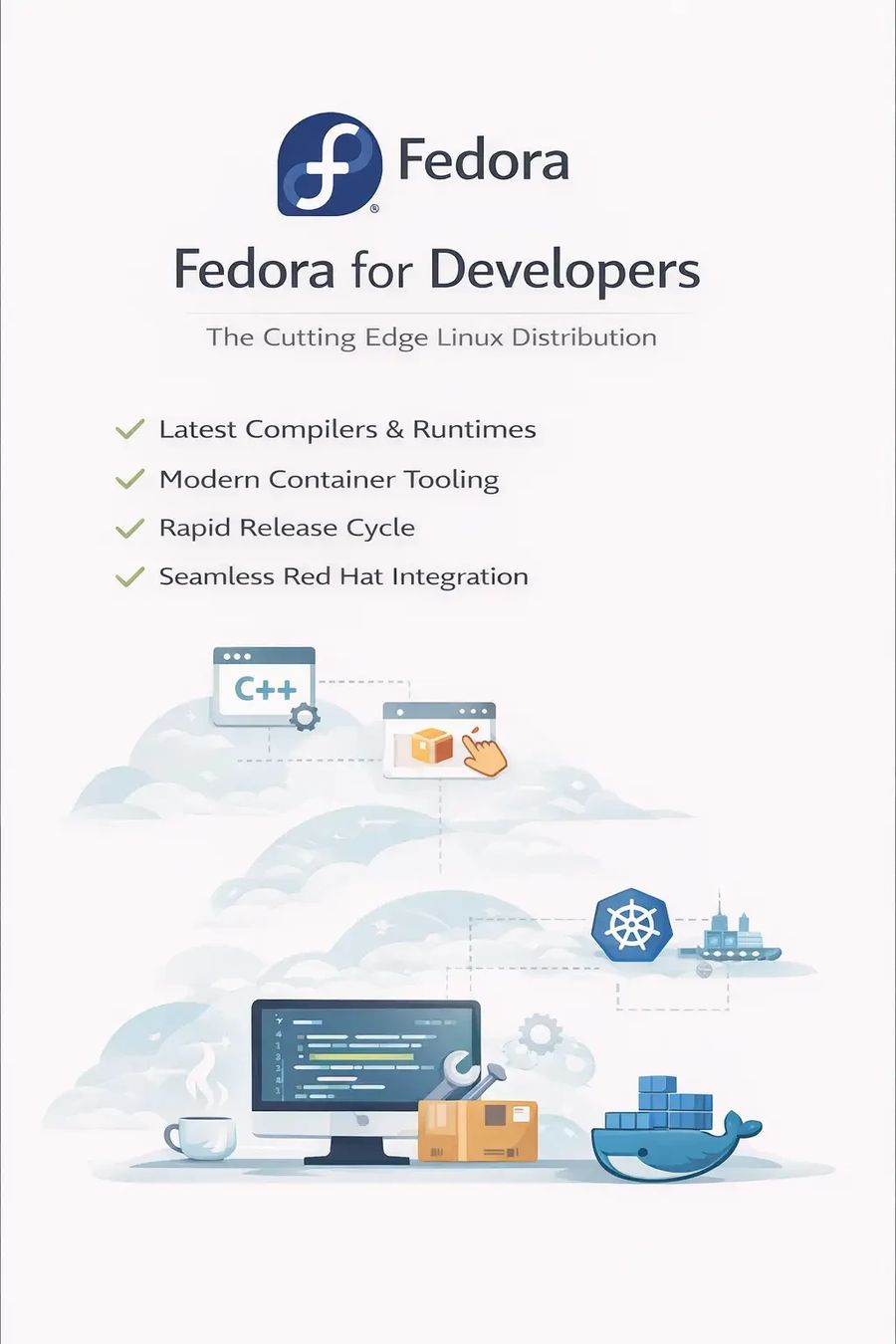
Fedora also integrates closely with the broader Red Hat ecosystem, which makes it particularly appealing for teams working in enterprise, DevOps, and cloud-native environments. If your workflow involves containers, automation, and continuous deployment pipelines, Fedora fits naturally into that stack. For example, if you're exploring what is Docker and want to use the most recent features, Fedora is your best bet.
Its strong alignment with upstream innovation means developers can experiment, build, and test using technologies that are shaping the future of Linux infrastructure. This includes better support for virtualization vs containerization testing.
For a broader comparison, you can also read Fedora vs Ubuntu to see how Fedora compares with another popular developer-focused distribution.
⚠️ Common Challenges and Solutions
Debian users should be aware that the Stable branch often includes older software versions. This is intentional, as stability takes priority over having the newest releases. For users who need more recent packages, the Backports repository offers a practical middle ground, allowing access to newer versions without abandoning the stability of the core system. If you run into issues, learning how to update Linux properly can solve most versioning problems.
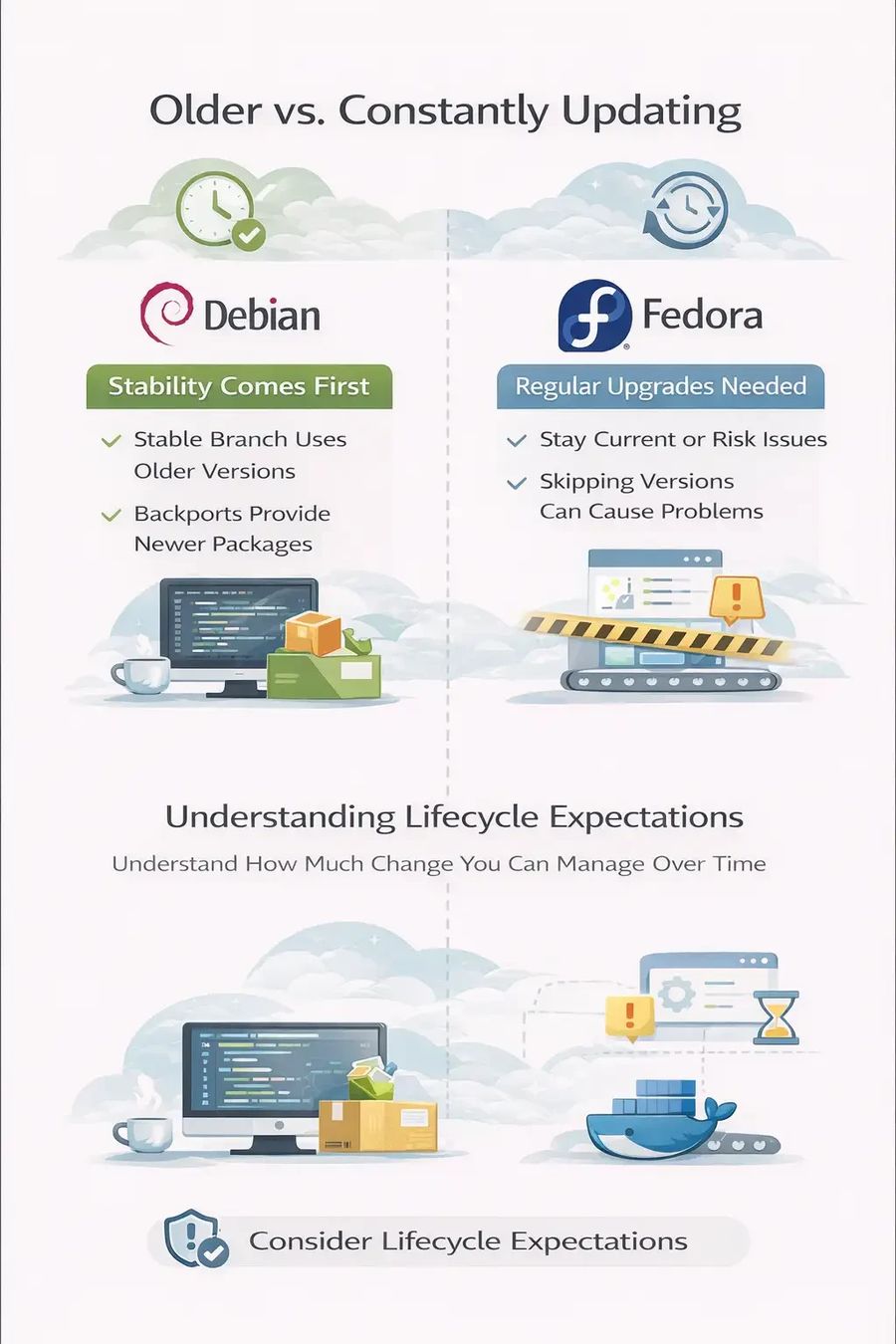
Fedora users, on the other hand, need to be comfortable with regular upgrades. Because each release is supported for a limited time, staying current is part of the experience. Skipping versions or delaying upgrades for too long can introduce compatibility issues or make the upgrade process more complex than necessary. For those on a Linux VPS, scheduling these upgrades during low-traffic periods is critical.
That's why understanding the lifecycle expectations of each distribution is essential. The right choice depends not just on features, but on how much change you're willing to manage over time.
🏁 Final Recommendation
If you're running production workloads, managing VPS hosting, or maintaining infrastructure services that need to stay stable for years, Debian is usually the safer long-term bet. Its predictable release cycle and conservative update model reduce surprises and make long-term planning much easier. Many professional setups rely on a VMware dedicated server running Debian for mission-critical stability.
If you're planning to deploy cloud infrastructure or launch a hosting environment, you can explore our Debian VPS Server solutions to see how Debian performs in real-world production scenarios.
In 2026, both distributions are mature, capable, and widely respected. The right choice ultimately comes down to your upgrade tolerance and whether you prioritize the "latest and greatest" or "rock-solid reliability." Whether you need what is VPS hosting for a small project or a massive enterprise, both Debian and Fedora offer the tools you need to succeed.

Leave A Comment