
Domain privacy (also known as domain privacy protection or WHOIS privacy) is a essential service that keeps your personal contact information hidden from the public WHOIS database. When you register a domain name, ICANN requires registrars to collect accurate ownership details—including your name, email, and physical address—which otherwise become visible to the entire world. In this guide, we will explore how privacy protection works, its benefits, and why it is a critical step for any website owner in 2026.
🛡️ What is domain privacy?
Domain privacy protection functions as a mask for your personal data. Without it, your private information is stored in a publicly accessible directory. This service works by replacing your real contact details with anonymized or proxy information provided by your domain registrar. This way, your domain remains legally registered in your name, but your private data stays protected from spammers, marketers, scammers, and unwanted solicitations.
In simple terms, domain privacy protects your identity, not your website. It allows you to own and manage a domain confidently without exposing your personal life to the global internet.
📋 What Does Domain Privacy Protect?
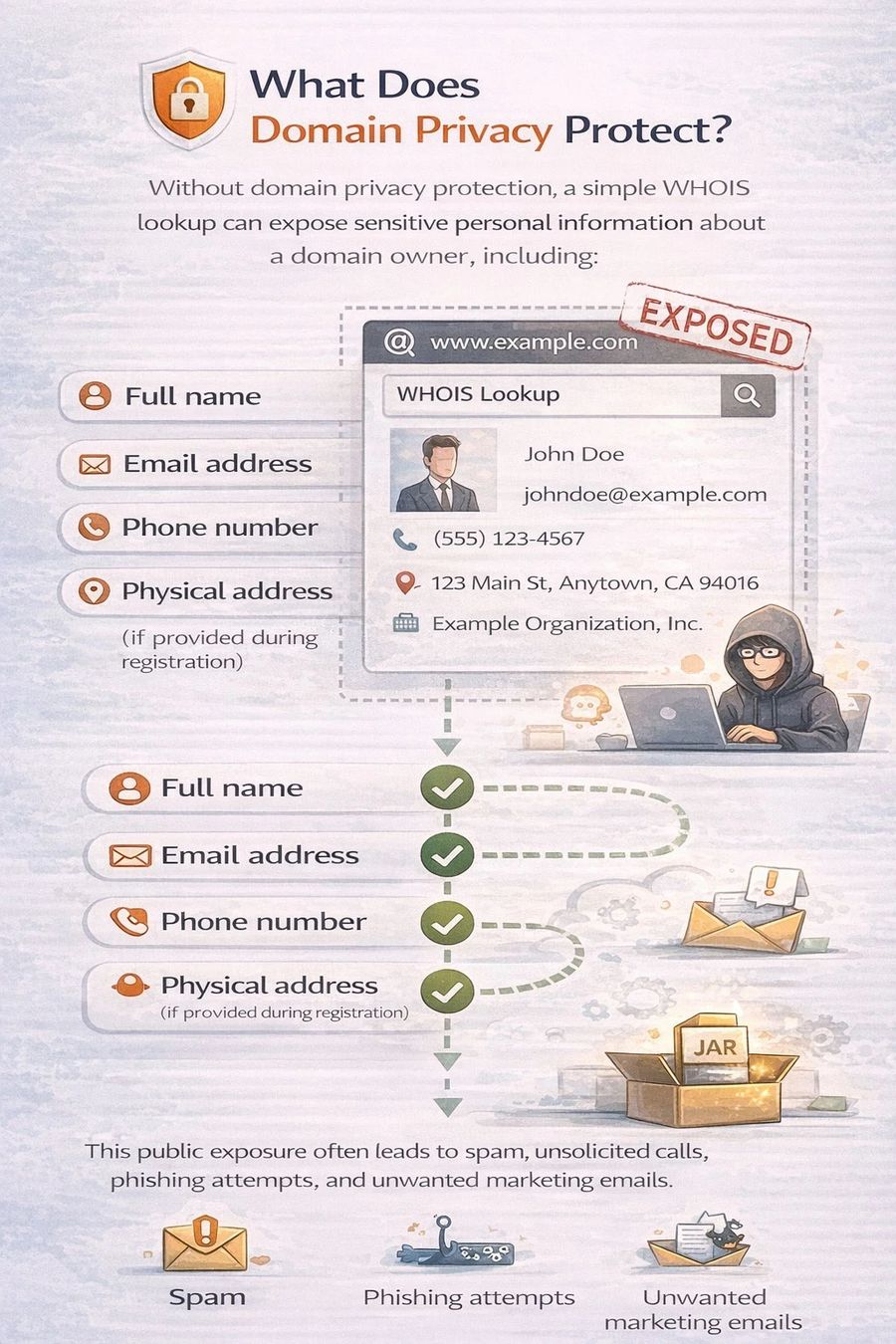
Without domain privacy protection, a simple WHOIS lookup can expose sensitive personal information, including:
- Full name
- Email address
- Phone number
- Physical address
- Organization name (if provided)
This public exposure often leads to spam, unsolicited calls, phishing attempts, and unwanted marketing emails. For those looking to increase their overall online footprint securely, understanding how to create a website with privacy in mind is the first step.
✅ What Domain Privacy Masks
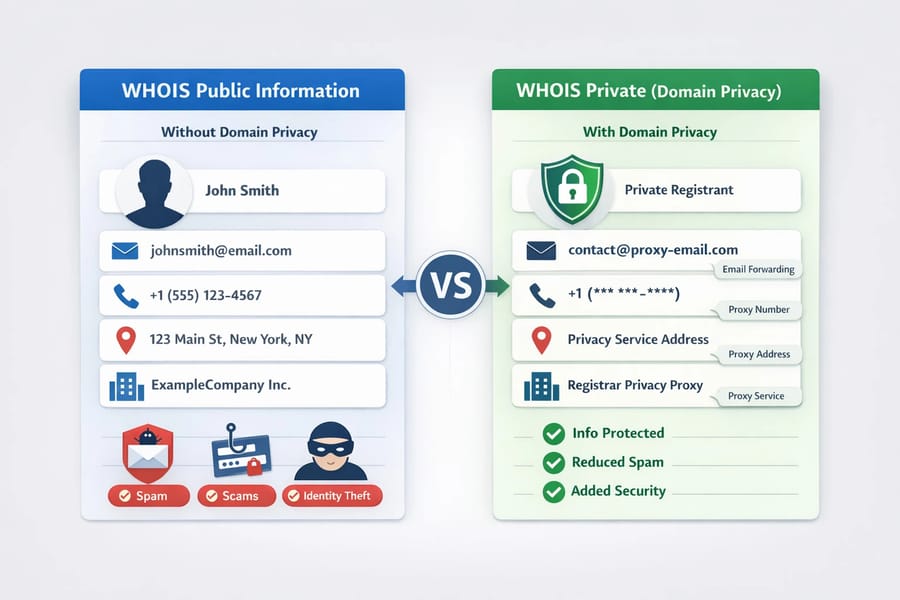
When enabled, your registrar replaces your real details with proxy information:
- Registrant name: Replaced with the registrar or a privacy service name.
- Email address: Replaced with an anonymized forwarding email.
- Phone number: Replaced with a proxy contact number.
- Physical address: Replaced with the registrar's physical address.
❌ What Domain Privacy Does Not Hide
For transparency and internet accountability, certain technical details remain visible:
- Domain registration and expiration dates.
- Registrar name and domain status.
- Nameservers.
🔍 What Is WHOIS and How a WHOIS Lookup Works?
The WHOIS database is a global, publicly accessible directory that stores registration information for domain names. Whenever a domain is registered, its details are recorded and can be viewed using a lookup tool. This system plays a key role in keeping the internet organized and trustworthy by providing ownership accountability.
🔄 WHOIS Lookup vs. Privacy vs. Redaction
| Term | Meaning |
| WHOIS lookup | A public search for domain ownership data. |
| WHOIS privacy | The registrar masks owner data using a proxy service. |
| WHOIS redaction | GDPR-based removal of specific data fields. |
While GDPR caused partial redaction for EU citizens, domain privacy is still necessary globally to prevent data scraping and ensure email protection.
⚙️ How Domain Privacy Protection Works (Step-by-Step)
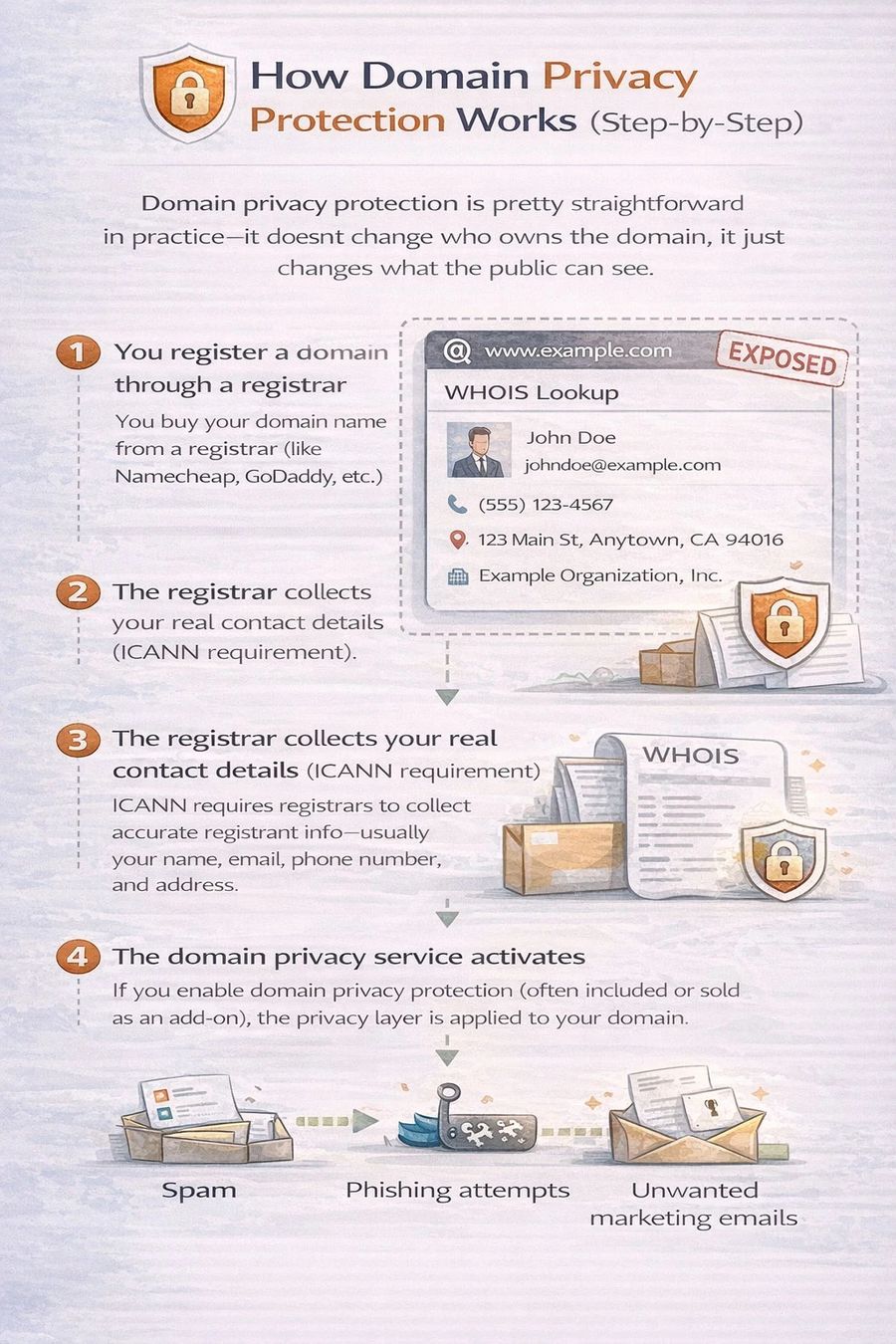
- Registration: You buy your domain from a registrar.
- Data Collection: The registrar collects your info to satisfy ICANN requirements.
- Activation: The domain privacy service is applied to your record.
- Proxy Replacement: WHOIS fields display the registrar's details instead of yours.
- Email Forwarding: Messages sent to the proxy email are forwarded to your real address.
- Dispute Handling: Legal requests go through the registrar, maintaining your buffer.
💡 What Is Full Domain Privacy and Protection?
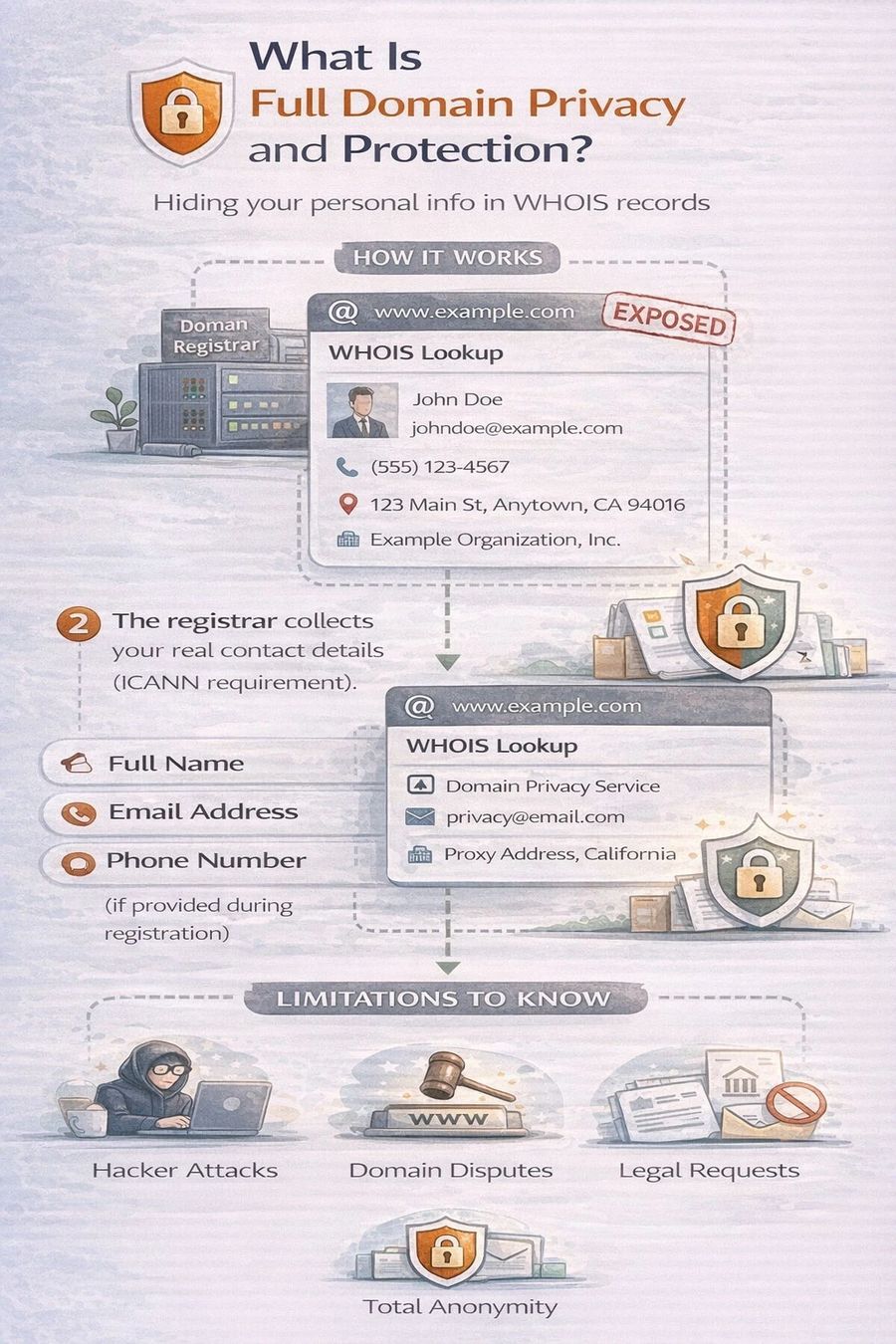
You'll often see terms like "Full Domain Privacy and Protection" or "Premium WHOIS Protection." These are mostly branding terms for hiding your info. However, some "Full" packages include extra security layers, such as ownership alerts or malware scanning. It is important to remember that this does not replace a secure server environment.
📊 Feature Comparison: Basic vs. Full Privacy
| Feature | Basic Privacy | "Full / Premium" |
| WHOIS masking | Yes | Yes |
| Email forwarding | Yes | Yes |
| Spam filtering | No | Yes |
| Ownership alerts | No | Often |
🤔 Is Domain Privacy Worth It?
Short answer: Usually, yes.
Without domain privacy, your details can be scraped by bots within hours of registration. This often leads to fake "domain expiration" or "urgent renewal" phishing scams. For individuals, freelancers, and small businesses, the $5–$15 annual cost is a small price for significant peace of mind. If you are operating in a high-risk environment, you might also consider an anonymous VPS to further decouple your identity from your infrastructure.
✅ Do I Need Domain Privacy? (Decision Guide)
| Use Case | Recommendation |
| Personal blog / Portfolio | Yes |
| Small business | Yes |
| Non-profit | Yes |
| Enterprise brand | Optional |
| High-risk region | Strongly Recommended |
🔐 Domain Privacy vs. SSL (Common Confusion)
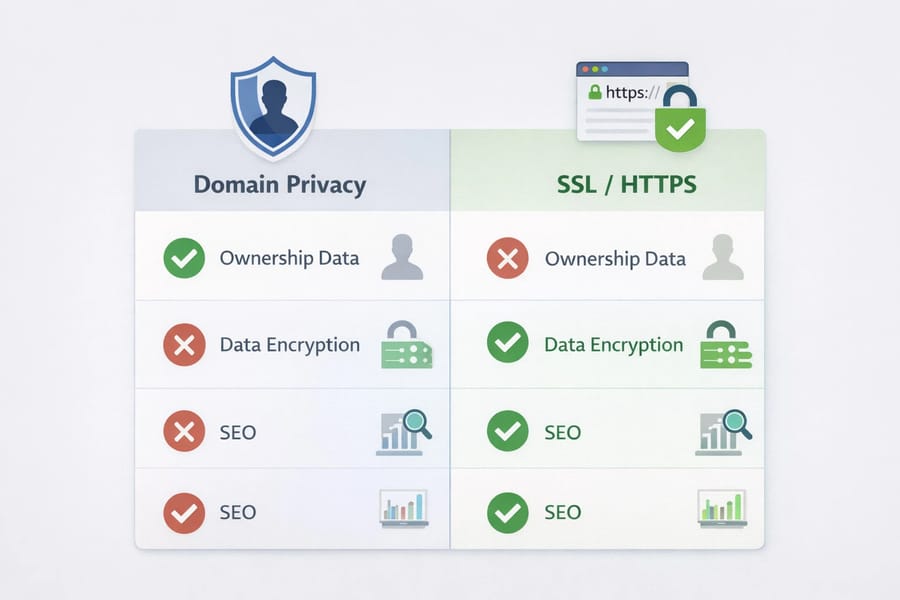
Is domain privacy the same as SSL? No. They protect completely different things:
- Domain Privacy: Protects the owner's identity (WHOIS data).
- SSL (HTTPS): Protects the visitor's data (encryption).
While privacy hides who you are, SSL ensures data traveling to your site isn't stolen. If you're using Nginx, make sure to configure Nginx SSL correctly to complement your domain's privacy with robust encryption.
🚩 Common Myths About Domain Privacy
- "It makes my site anonymous": False. Your website content is still public.
- "It protects from hacking": False. You still need Linux server security and strong passwords.
- "Google dislikes private domains": False. There is no negative impact on SEO.
- "It's illegal": False. It is fully ICANN-compliant.
🎯 Conclusion: Should You Use Domain Privacy?
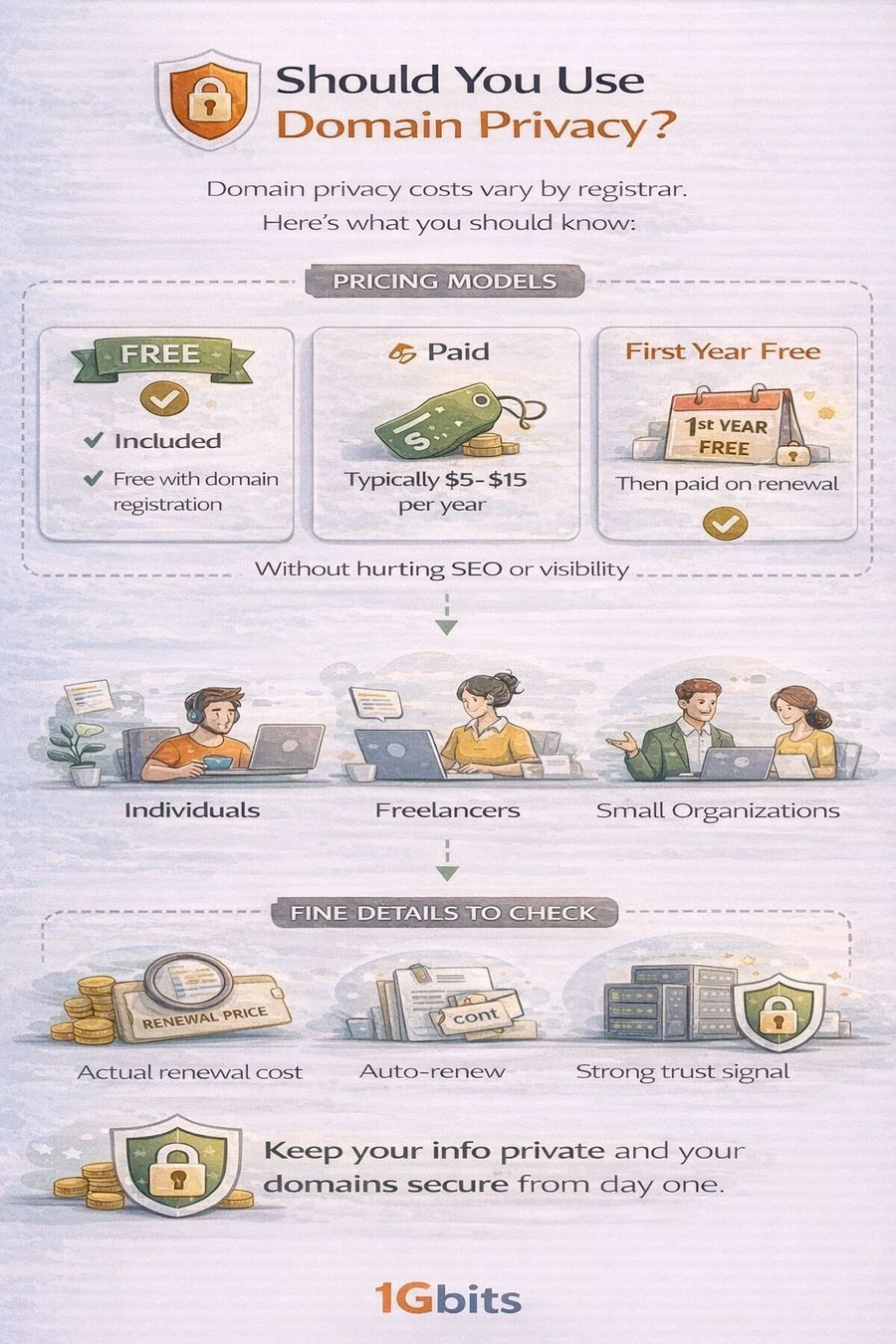
Domain privacy isn't about secrecy—it's about control. It prevents unnecessary exposure, reduces spam, and aligns with modern online security expectations. For most users, it is a simple, low-cost way to avoid identity theft and harassment.
If you're still getting familiar with how domains work, we recommend reading What Is a Domain Name to better understand how ownership and management fit together. Choosing the right infrastructure, like the high-performance solutions at 1Gbits, ensures that your privacy and site performance go hand-in-hand.

Leave A Comment