
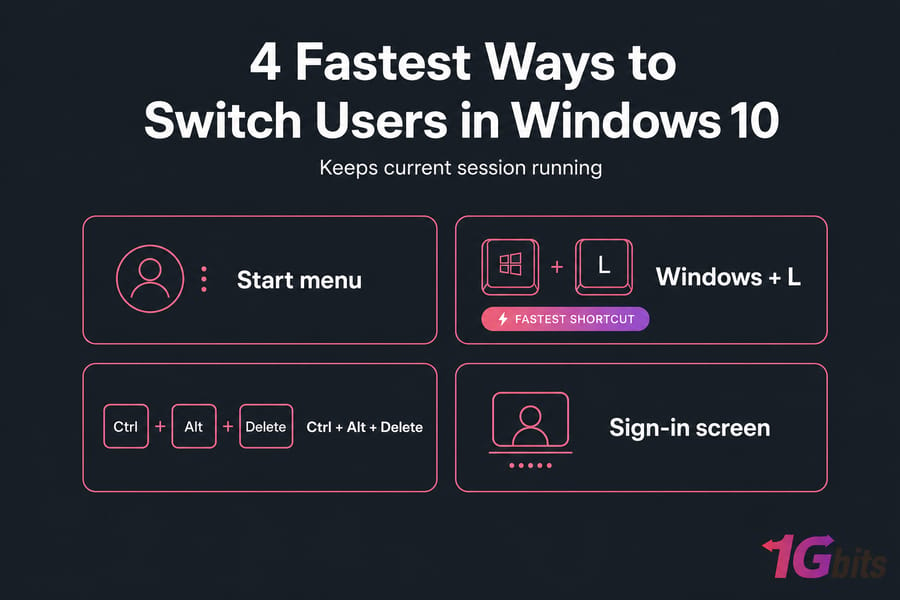
If you need to switch user in Windows 10 without signing out, the fastest options are the Start menu, Windows + L, Ctrl + Alt + Delete, or the sign-in screen. All of these keep the current user session running, which is handy on a shared computer or family PC. Windows 10 uses something called Fast User Switching — one person stays signed in while another signs into a different account. Your apps and files stay open, but background sessions use RAM and CPU, so older machines may feel slower with multiple accounts active.
Usually, multiple individuals can use a single PC or laptop — and they may harm your operating system if they're inexperienced. That's why Windows 10 lets you establish individual accounts for each user, with their own files, preferences, and programs. Here's how to switch users in Windows 10 if your computer includes several user accounts.
Before You Start
Make sure multiple user accounts exist
You need at least two accounts on the PC. The second one can be a local account or a Microsoft account, but it must exist and be enabled. Managing multiple users on a Windows VPS follows the same principles just with more control.
Lock vs Sign Out vs Switch User
These three actions are different, and mixing them up causes frustration:
| Option | What it does | Best for |
| Lock | Keeps your session active and shows the lock screen | Stepping away briefly |
| Switch User | Keeps your session active and lets another account sign in | Shared PCs with multiple user accounts |
| Sign Out | Closes your apps and ends your session | Freeing resources or ending work completely |
7 Ways to Switch Users in Windows 10
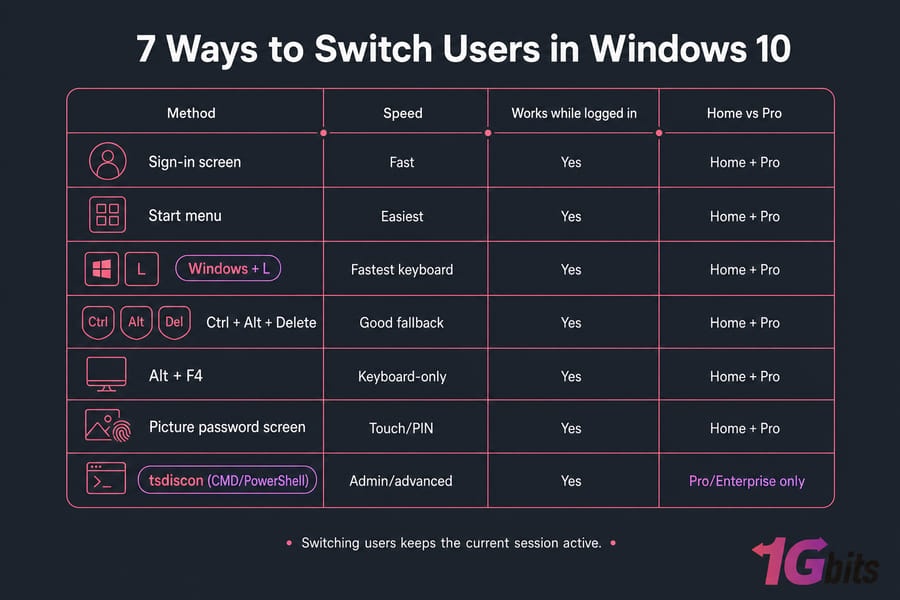
Method 1: From the sign-in screen
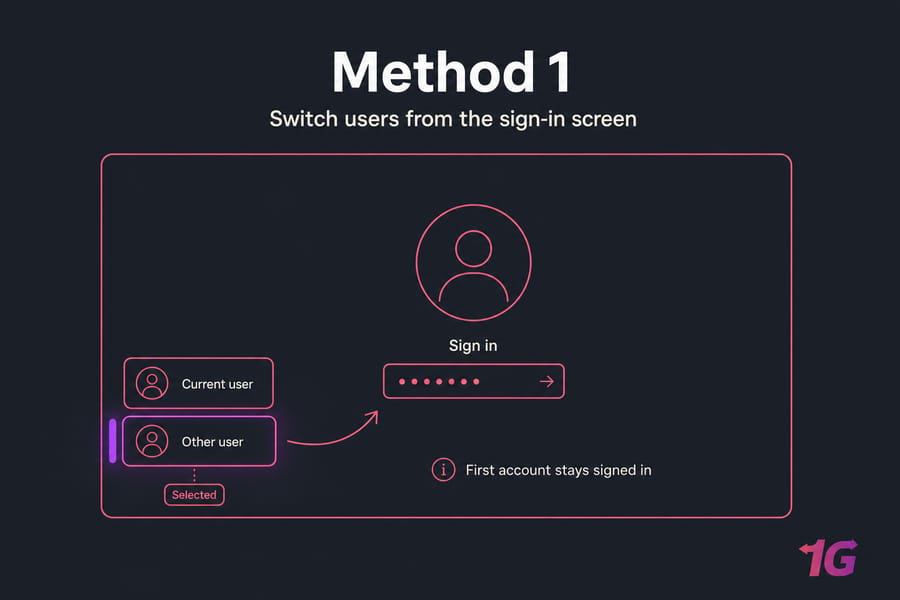
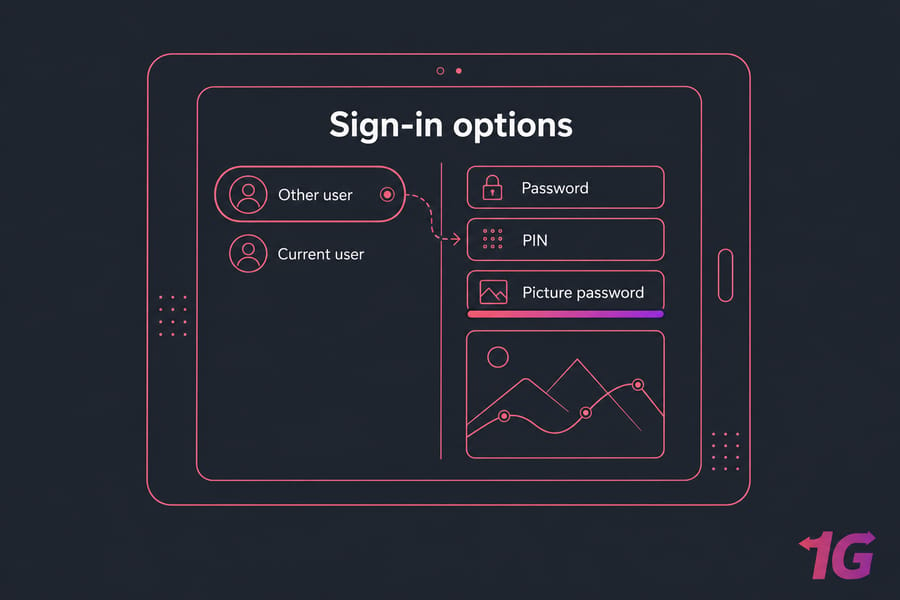
The sign-in screen is the first thing you see when you turn on your Windows 10 PC or tablet. If you are already logged in, you may lock Windows 10 by pressing Windows + L on your keyboard to reach it. On the lock screen, click or press to bring up the sign-in screen. By default, Windows 10 loads the most recent user profile. A list of available user accounts appears in the screen's bottom-left corner. Select the profile you would like to use from the list and enter the username and password — Windows prompts for the password, PIN, or picture password used the last time they signed in.
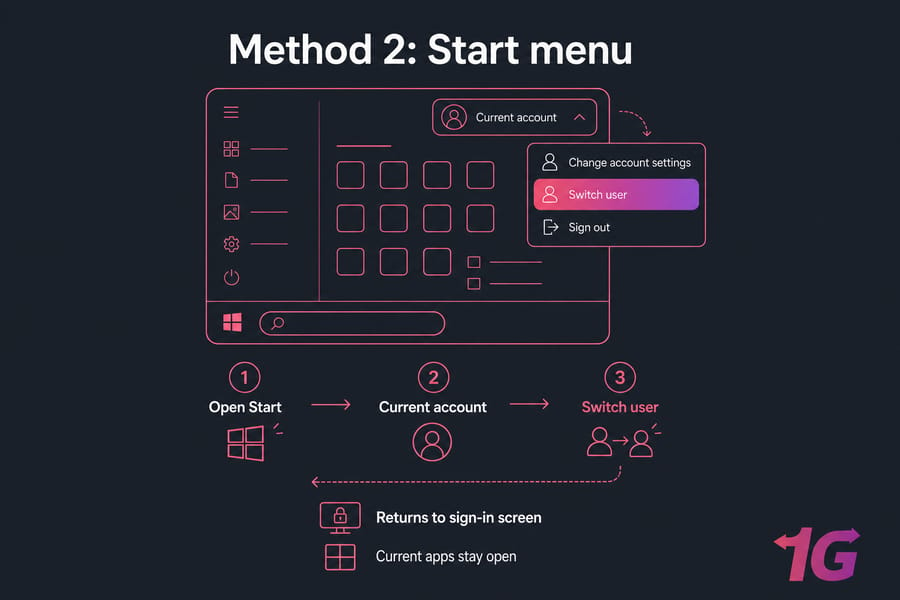
Method 2: From the Start menu
If you've already logged into Windows 10, you may alter your user profile from the Start Menu. Click or select the symbol of your user profile in the Start Menu. After that, choose the user account you wish to switch to — you will be redirected to the login screen, where the selected user will be loaded. You're in now that you've entered the correct login credentials. You may swap between sign-in options by choosing or touching "Sign-in choices" and selecting the option you wish to use.
Method 3: Using Windows + L
Press the Windows + L keys on your keyboard simultaneously. You will be locked out of your user account and displayed the Lock screen wallpaper. The login screen appears when you click anywhere on the screen. Please select the account you wish to use and log in with its credentials. You may swap between sign-in alternatives by choosing or touching "Sign-in choices" and selecting what you wish to use.
Read: Windows shortcut keys
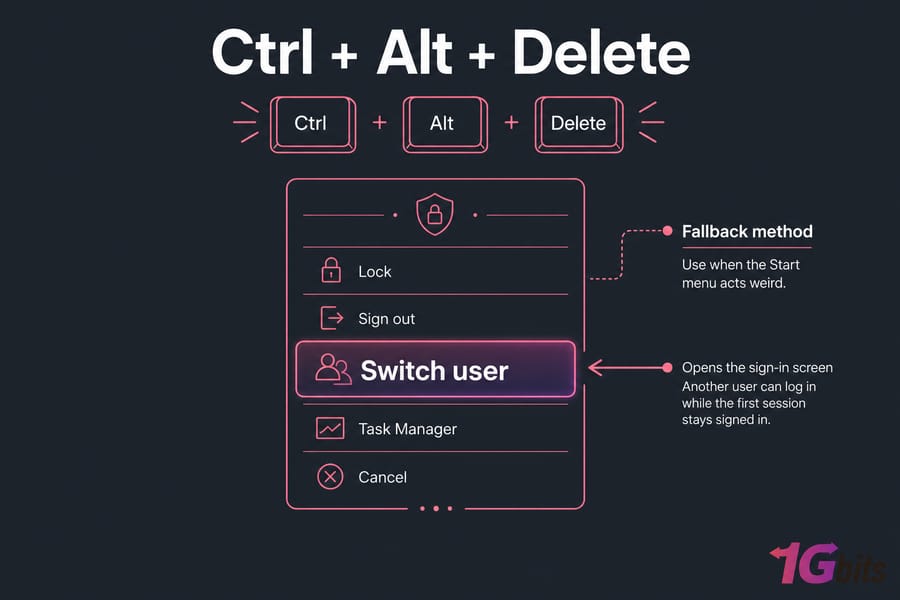
Method 4: Using Ctrl + Alt + Delete
To begin, hit the Ctrl + Alt + Delete keys on your keyboard simultaneously. A new screen appears, with a few options prominently displayed in the middle. After selecting or pressing "Switch user," you'll be sent to the login screen. Select the desired user profile and login with the appropriate credentials. By choosing or touching "Sign-in options" and then picking the option you want, you may choose between the sign-in alternatives.
Method 5: Using Alt + F4
First, go to your desktop and check to see if any programs are active and visible on the screen. All of your open programs must be minimized — otherwise, you will wind up shutting them one by one. Then, when all your programs have been minimized or closed, hit the Alt + F4 keys on your keyboard simultaneously. Click the "Shut down" option in the Shut Down Windows prompt, and a selection of other alternatives should appear. Select "Switch user" and click OK. Select the user account you wish to use on the new login screen, input the necessary login credentials, and you're in.
Method 6: When prompted for a picture password
You'll see the user account and the image used as a passcode when you go to the login screen if the most recent user account used an image passcode. There are two links underneath the user account name: one for accessing different sign-in choices for the same user account and the other for switching users. You'll get a list of all the user accounts on your Windows 10 computer or device when you click or touch "Switch user." Select the user you wish to switch to by clicking or tapping on their name. Then you'll be prompted to input the account's prior login information, such as the password, PIN, or picture password.
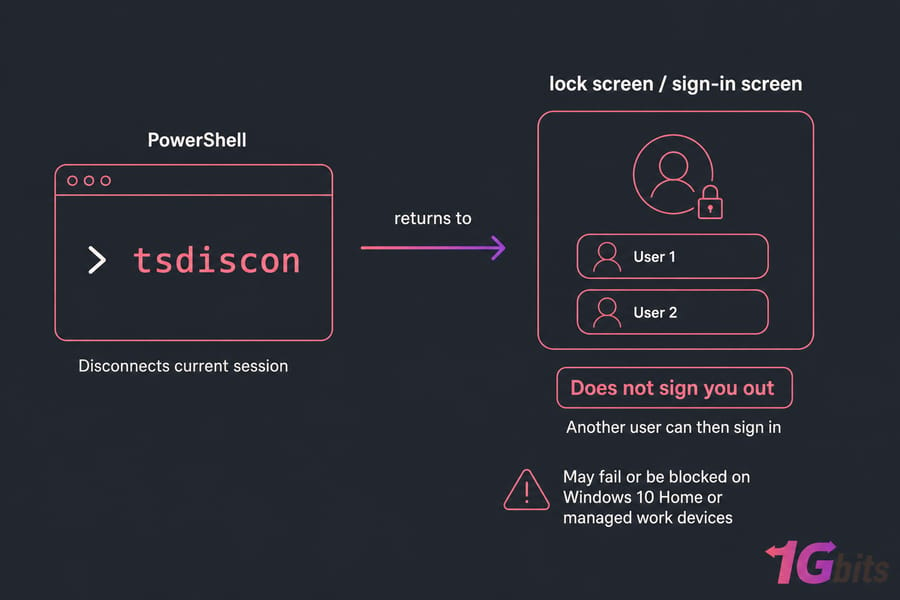
Method 7: From Command Prompt (CMD) or PowerShell
Open Command Prompt or PowerShell if you prefer command-line environments. Then hit Enter after typing tsdiscon. You can go to the Lock screen with the tsdiscon command — it disconnects your current session without signing you out. Switch users by clicking, tapping, or pressing a key on your keyboard. This approach, unfortunately, does not work with Windows 10 Home. Windows 10 Pro and other versions, such as Windows 10 Enterprise, are the only ones that include it.
Why "Switch User" May Not Appear in Windows 10
Fast User Switching is disabled
On Pro, Enterprise, and Education, a Group Policy setting called Hide entry points for Fast User Switching can strip the option from every menu. The setting lives under Computer Configuration > Administrative Templates > System > Logon.
The other account is hidden or disabled
If the other user account does not appear, confirm the account actually exists, isn't disabled, and has a valid user profile. Password or PIN issues can also block sign-in.
You are on a managed work or school device
Some office PCs disable account switching through Group Policy, domain rules, or security baselines. In that case, you may need IT approval — there's nothing to fix locally.
Windows 10 Home vs Pro limitations
Basic switching methods work on both Home and Pro. But admin tools, Local Group Policy Editor, and command-line behavior are more limited on Home. Whether you're on a physical PC or a Windows 10 VPS or Windows 11 VPS, the switching methods work identically across editions.
How to Enable Fast User Switching in Windows 10
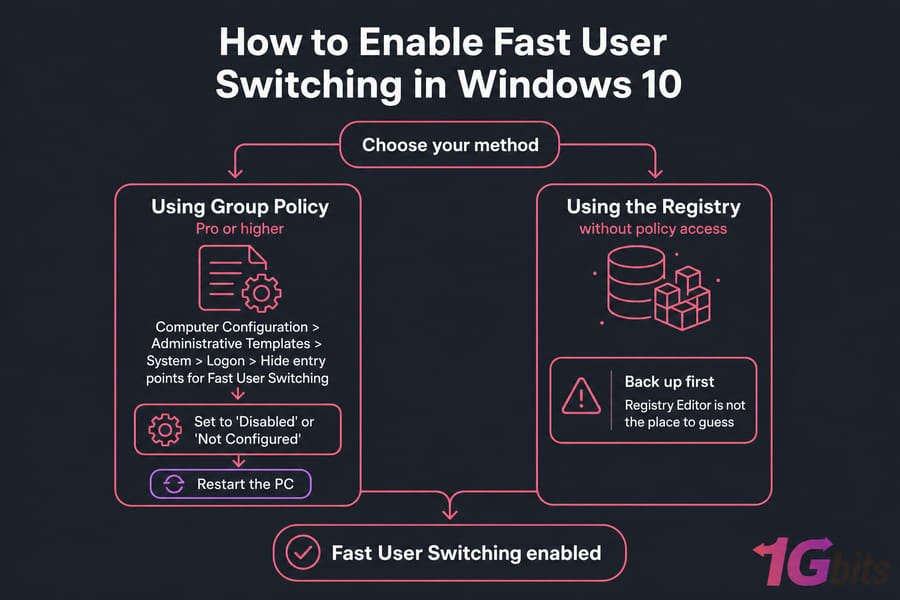
Using Group Policy (Pro, Enterprise, Education)
Press Windows + R, type gpedit.msc, and hit Enter. Navigate to Computer Configuration → Administrative Templates → System → Logon → Hide entry points for Fast User Switching. Double-click it, set it to Disabled or Not Configured, click OK, and restart. The Switch user option should come back.
Using the Registry (Home edition)
Open regedit and go to HKLM\SOFTWARE\Microsoft\Windows\CurrentVersion\Policies\System. Look for a DWORD called HideFastUserSwitching. Set it to 0 (or delete it). Reboot. Back up the registry first — Registry Editor is not the place to guess.
Troubleshooting Problems Switching Users in Windows 10
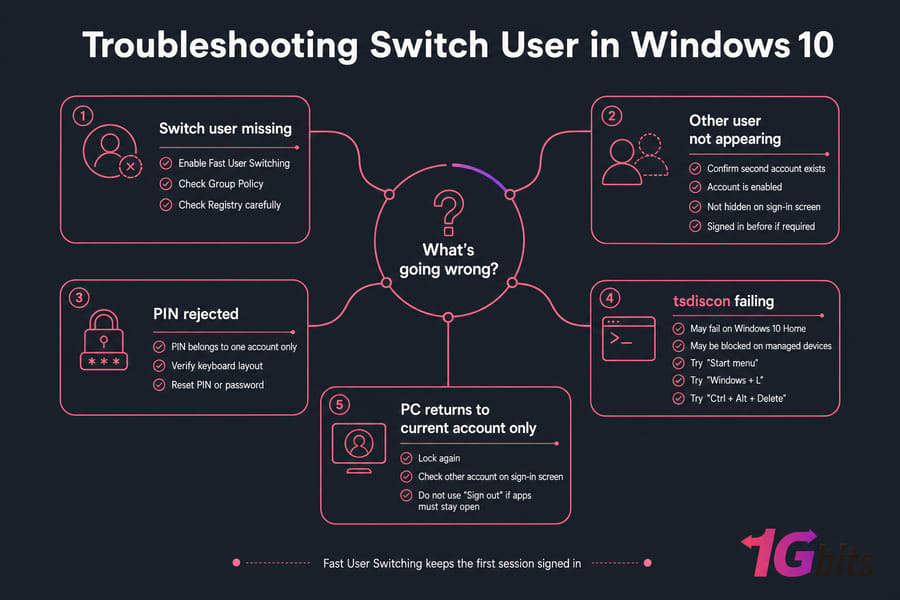
The other account doesn't appear
Make sure the second account is enabled, has signed in before if required by policy, and isn't hidden.
Password or PIN is not accepted
Double-check the sign-in method for that user. A PIN belongs to one account, not all accounts. If PIN or password login keeps failing, reset it and verify the keyboard layout isn't wrong on the sign-in screen.
tsdiscon doesn't work
You're probably on Home edition, or you didn't run the terminal as administrator. Try elevating it, or use one of the GUI methods instead. If this is a remote admin workflow, you may also be dealing with session rules tied to how to enable Remote Desktop on Windows.
The PC keeps returning to the same account
Disable any auto-login setting via netplwiz. Untick Users must enter a user name and password to use this computer — actually, you want that box ticked to force the sign-in screen on wake.
Home vs Pro: What's Different for User Switching
For regular user switching, Home and Pro are basically the same. The difference shows up when you need admin fixes. Windows 10 Pro, Enterprise, and Education give you Local Group Policy Editor. Home usually doesn't. That means troubleshooting Fast User Switching is easier on Pro. If you manage many Windows systems or need tighter control, some admins move toward dedicated Windows server hosting or business-grade Windows environments.
Is Switching Users Safe on Shared PCs?
Usually, yes — with caveats. Each account has its own profile, documents, and app data. Other users can't poke around in your files unless they have admin rights. But your session is still alive in the background. Anything you didn't lock down stays open in memory. For a family PC, switching users is fine. For a PC where you handle sensitive work, sign out fully when you're done. And keep each person on a standard account, not administrator, unless they genuinely need it.
Conclusion
Hence we saw how we could switch users in Windows 10. These techniques are pretty usable and easy to implement and can help the administrator monitor the users and give specific rights to specific users. This will also inform users how they can switch to different login sessions when operating on Windows 10. If you just want the simplest answer, use the Start menu or press Windows + L — those two methods work well for most people and let you switch users in Windows 10 without signing out.
If account switching keeps failing, check Fast User Switching, account visibility, and sign-in credentials first. However, for environments that require more robust management and control, such as those with multiple users or complex access needs, using a dedicated Windows server allows for centralized management of user accounts, permissions, and security settings. It provides a stable and secure platform where administrators can deploy and manage user profiles, enforce policies, and streamline access controls more effectively than on a standard desktop environment.
People also read:

Leave A Comment