

Keeping the correct date and time on your Linux system is crucial for logging, security, and network synchronization. Whether you need to manually adjust the time, synchronize with an online server, or configure time zone settings, Linux offers multiple ways to do so. This guide will walk you through different methods for setting the date and time on Linux, ensuring accuracy and proper system functionality.
Need the commands right now? On any modern systemd-based distribution, timedatectl is the tool you'll reach for. Substitute your own date, time, and IANA timezone in the examples below.
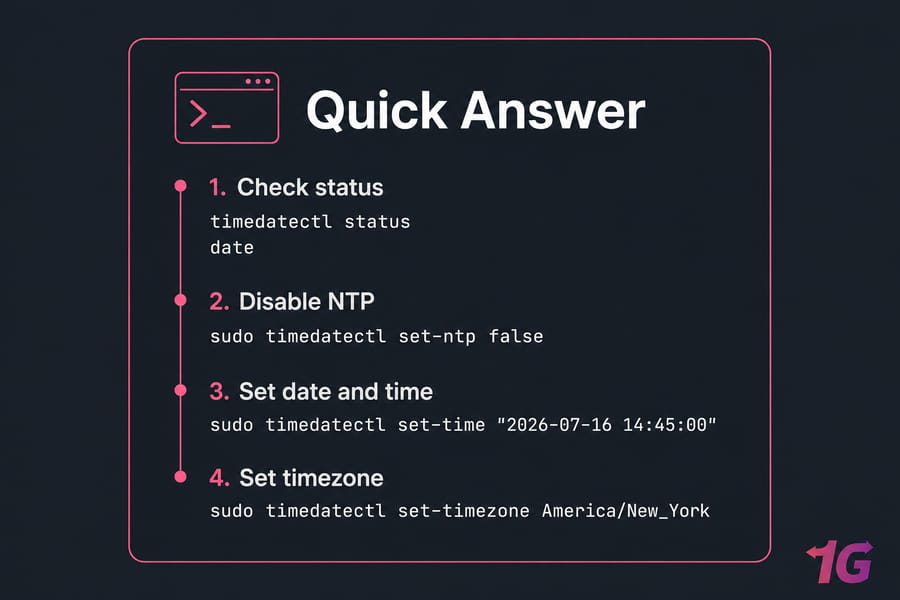
🔍 Quick Answer: Check Current Date and Time
timedatectl status
date
⚙️ How to Manually Set Date and Time
sudo timedatectl set-ntp false
sudo timedatectl set-time "2026-07-16 14:45:00"
🌍 Change the Timezone
sudo timedatectl set-timezone America/New_York
timedatectl status
🔄 Enable Automatic Time Synchronization
sudo timedatectl set-ntp true
timedatectl timesync-status
That's the whole job for most people. If you want to understand why each step matters — and how to fix things when they break — keep reading.
⚠️ Before You Change the Linux System Clock
A couple of quick warnings before you start typing. Getting these wrong is how people end up with a clock that keeps snapping back to the wrong value.
Check whether NTP is enabled
If automatic synchronization is on, Linux will politely refuse to let you set the time by hand. You'll see "Failed to set time: Automatic time synchronization is enabled." So check first:
timedatectl status
sudo timedatectl set-ntp false
Don't leave synchronization off permanently unless you have a specific reason. Most machines want NTP running.
Use sudo or a root account
Reading the clock needs no special rights. Changing it does. Every command that modifies the time or timezone needs sudo or a root shell. If you're new to the terminal, our guides to essential Linux commands and how to use Linux are good primers.
Back up config files before editing them
When you get to custom NTP servers later, you'll edit files like /etc/chrony.conf. Copy them first. One cp file file.bak saves a lot of grief.
🕐 How Linux Manages Date and Time
Two clocks, not one. That trips up beginners constantly. If you're still getting familiar with the operating system itself, here's what is Linux — a quick overview that helps contextualize these concepts.
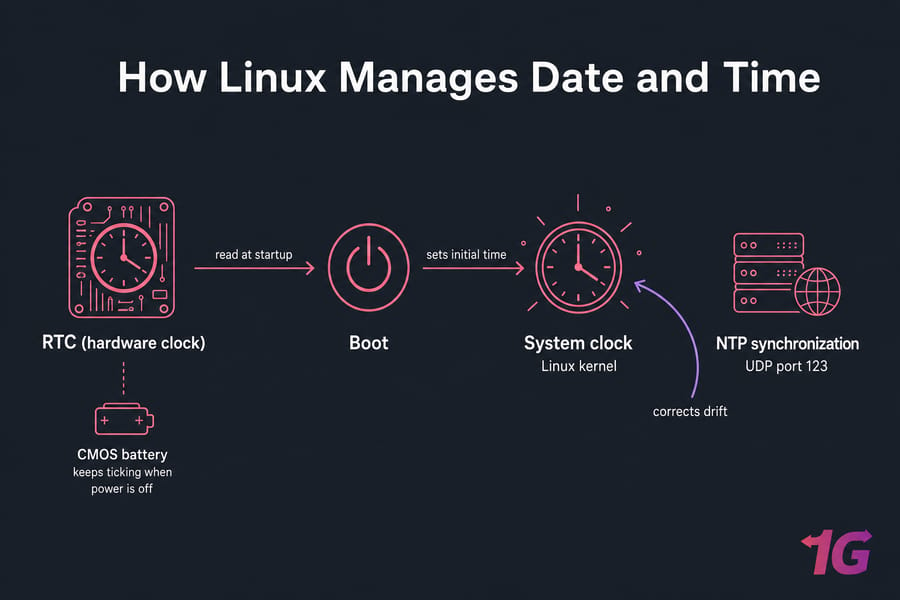
System clock vs hardware clock
Linux has two types of clocks. The system clock (software clock) is maintained by the Linux kernel after the system boots up. The hardware clock — also called the RTC (real-time clock) — sits on the motherboard and keeps ticking even when the power is off, thanks to a small CMOS battery. At boot, Linux reads the RTC to set an initial time, then a synchronization service nudges the system clock to the correct value.
To check both clocks:
hwclock --show
date
UTC, local time, and timezones
UTC is the global reference. Your local time is UTC plus or minus your timezone offset, adjusted for daylight saving. Linux uses the IANA timezone database, so you'll specify zones like America/New_York or Asia/Kolkata — not vague abbreviations like "IST."
How NTP keeps the clock accurate
Quartz clocks drift. A few seconds a day adds up fast. The Network Time Protocol fixes this by polling accurate time servers over UDP port 123 and gently correcting the system clock — no manual babysitting required.
📅 Set Date and Time with timedatectl
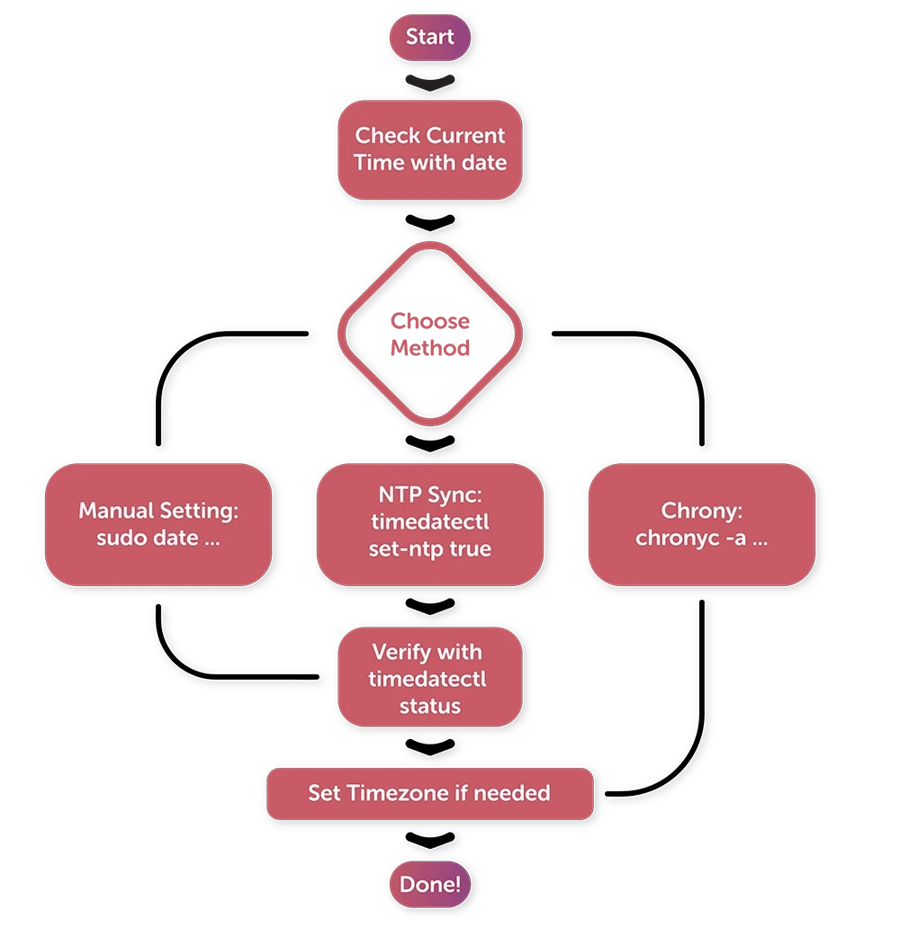
This is the recommended modern method. Follow the workflow in order and you won't hit the "synchronization enabled" wall.
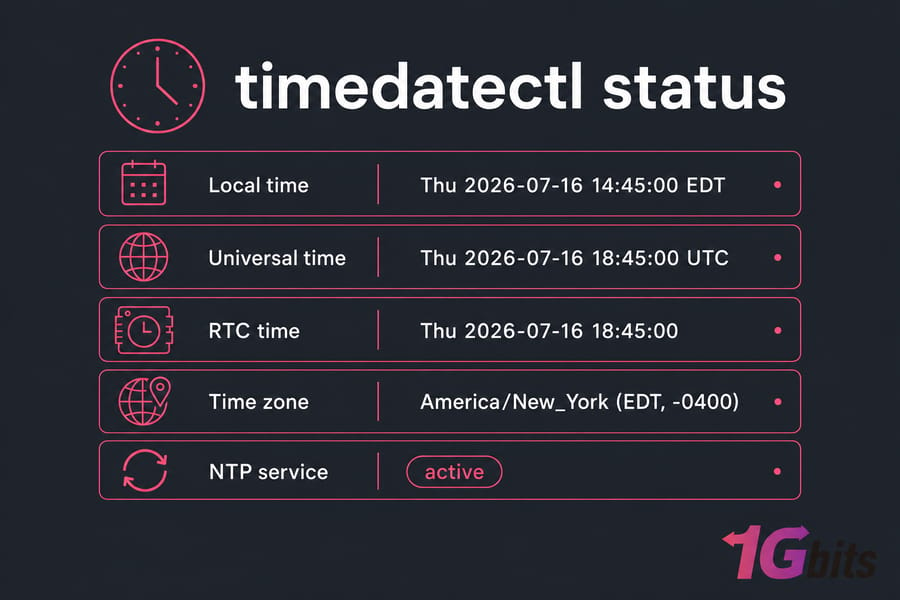
Before making changes, check your system's current time:

timedatectl statusThis will show:
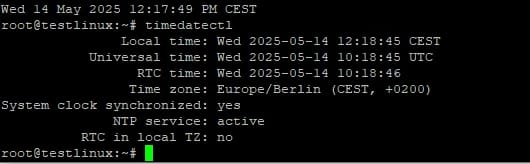
Set the date and time
sudo timedatectl set-ntp false
sudo timedatectl set-time "2026-07-16 14:45:00"
That timestamp is interpreted in your configured local timezone. Set the zone first if it's wrong.
Verify the change
timedatectl statusConfirm the local time, timezone, and NTP status all read correctly before moving on.
📝 Set Date and Time with the date Command
The classic date command still works. It's lowercase — always.

Use a human-readable date string
sudo date --set="2026-07-16 14:45:00"Clear, readable, hard to mess up. This is what I'd hand a beginner.
Use the compact numeric format
The old-school format looks cryptic but it's compact. The pattern is MMDDhhmm[[CC]YY][.ss]:
sudo date 071614452026Display a custom date format
date +"%Y-%m-%d %H:%M:%S"Handy for scripts and logs that expect ISO 8601. Other useful formats:
date +"%d-%b-%Y"
date +%s
Setting Date and Time Permanently
To ensure changes persist after reboot, update the hardware clock:
sudo hwclock --systohcThis syncs the system time to the hardware clock.
🌍 Change the Timezone in Linux
timedatectl list-timezones
timedatectl list-timezones | grep -i new_york
sudo timedatectl set-timezone America/New_York
timedatectl status
To run a server in UTC — which I'd recommend for almost any server:
sudo timedatectl set-timezone UTC🔄 Synchronize the System and Hardware Clocks
Direction matters here. Copy the wrong way and you overwrite a correct clock with a bad one.
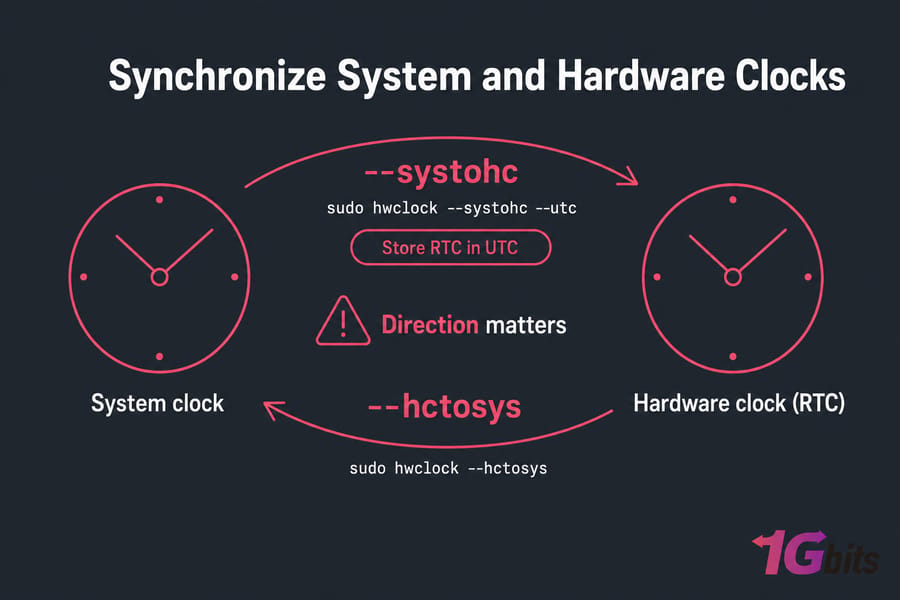
# System clock -> hardware clock (store RTC in UTC)
sudo hwclock --systohc --utc

# Hardware clock -> system clock
sudo hwclock --hctosys

# Set hardware clock manually
sudo hwclock --set --date "2025-03-25 14:45:00"
Use --systohc when your system time is correct and you want the RTC to match. Use --hctosys for the reverse. For dual-boot machines with Windows, keeping the RTC in UTC on Linux avoids the classic "clock jumps hours" problem.
🌐 Synchronize Linux Time with an NTP Server
Don't install every time daemon you find. Running two at once causes conflicts. Identify what's active first, then stick with it.
| Service | Best Use | Typical Distributions | Note |
| systemd-timesyncd | Lightweight client sync | Many systemd distros | Client only; managed via timedatectl |
| Chrony | Servers, VMs, laptops | RHEL-family, modern distros | Handles drift and jumps well |
| ntpd | Legacy/specialized | Older systems | Mostly replaced by Chrony |
| ntpdate | One-time legacy sync | Older systems | Deprecated on most current distros |
Enable systemd-timesyncd
sudo timedatectl set-ntp true
timedatectl timesync-status
Configure and verify Chrony
To install Chrony:
# Ubuntu/Debian
sudo apt install chrony

# CentOS/Rocky Linux
sudo yum install chrony
Enable and start:
sudo systemctl enable --now chronydCheck status and force sync:
chronyc tracking
chronyc sources -v
sudo chronyc makestep
Use traditional ntpd
sudo systemctl enable --now ntpdConfigure a custom NTP server
For Chrony, edit /etc/chrony.conf and add a server line, then restart. For timesyncd, edit /etc/systemd/timesyncd.conf and set the NTP= value.
🐧 Distribution-Specific Commands
Package names and service names aren't universal. Here's the tested breakdown.

| Distribution | Install Package | Service Name |
| Ubuntu / Debian | timesyncd built-in; apt install chrony |
chrony / systemd-timesyncd |
| RHEL / Rocky / Alma / Oracle | dnf install chrony |
chronyd |
| Fedora | dnf install chrony |
chronyd |
| Arch Linux | timesyncd built-in | systemd-timesyncd |
| Kali Linux | apt install chrony |
chrony |
Specific Distribution Notes
Arch Linux: To enable automatic time synchronization: sudo systemctl enable systemd-timesyncd && sudo systemctl start systemd-timesyncd. To manually set the time: sudo date 032514452025. For heavier workloads, a Linux dedicated server gives you full control over time synchronization and every other system setting.
Rocky Linux: For manual setting: sudo timedatectl set-time "2025-03-25 14:45:00". For NTP: sudo systemctl enable --now chronyd. On a Rocky Linux VPS, Chrony is usually the default time service and works well out of the box.
Oracle Linux: Manual: sudo date --set="2025-03-25 14:45:00". Auto: sudo yum install ntp && sudo systemctl enable ntpd --now.
Kali Linux: Manual: sudo date 032514452025. Sync: sudo timedatectl set-ntp true. If you run your security lab on a Kali Linux VPS, keeping the clock accurate is essential for packet captures and forensic timestamps.
🖥️ Set Date and Time with GNOME or KDE
For users who prefer a graphical interface, most Linux desktop environments provide an easy way to adjust the date and time.
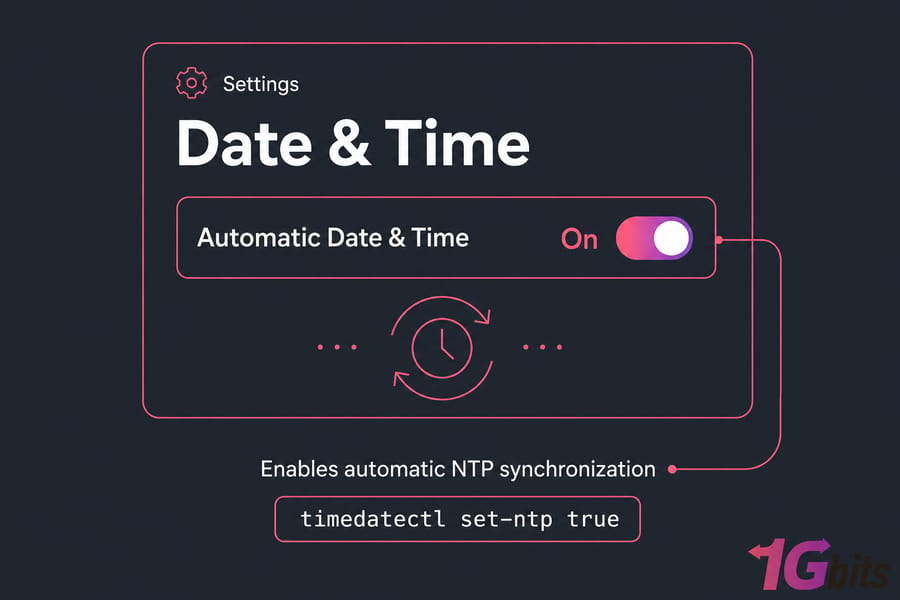
GNOME (Ubuntu, Fedora, Debian)
- Open Settings.
- Navigate to Date & Time.
- Toggle Automatic Date & Time if you want to use an internet time server. That toggle maps directly to
timedatectl set-ntp true. - To set the time manually, disable automatic sync and enter the desired date and time.
KDE Plasma (Kubuntu, OpenSUSE, Arch Linux)
- Open System Settings.
- Go to Regional Settings > Date & Time.
- Click Set Date and Time and enter the correct values.
For systems that do not allow GUI changes due to administrative restrictions, use the timedatectl command instead.
⚠️ Troubleshoot Incorrect Linux Date and Time
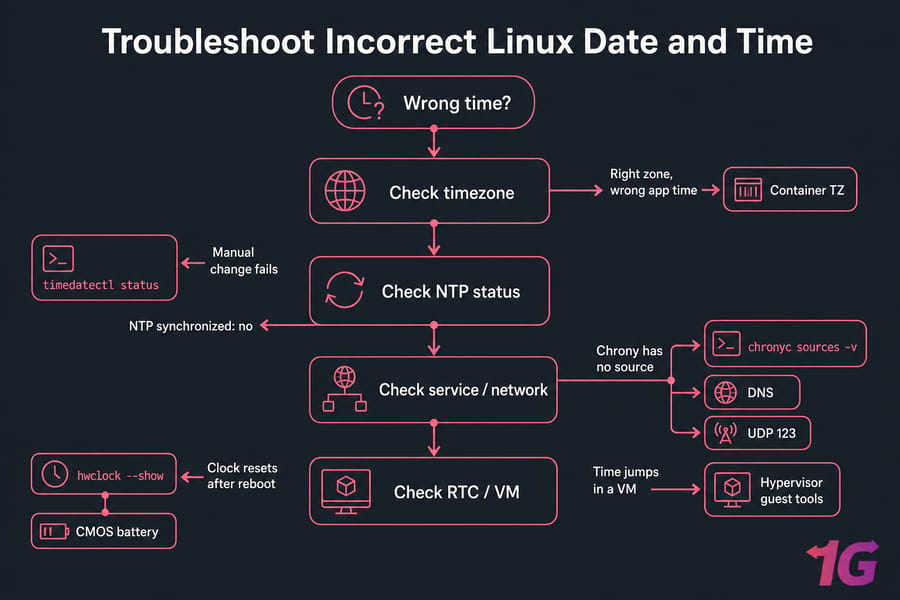
| Symptom | Check | Likely Fix |
| Manual change fails | timedatectl status |
Disable NTP temporarily |
| NTP synchronized: no | Service status, DNS, UDP 123 | Restart service, check network |
| Clock resets after reboot | hwclock --show |
Sync to RTC or replace CMOS battery |
| Right zone, wrong app time | App/container settings | Restart app or set container TZ |
| Chrony has no source | chronyc sources -v |
Fix server, DNS, or firewall |
| Time jumps in a VM | Hypervisor guest tools | Stop competing sync sources |
Additional Troubleshooting Steps
If your Linux system fails to update its time correctly:
- Restart the NTP or Chrony Service:
sudo systemctl restart chronydorsudo systemctl restart ntpd. - Manually Force Time Sync:
sudo ntpdate pool.ntp.orgif automatic sync fails. - Verify System Logs for Errors:
journalctl -xe | grep -i "time"orjournalctl -u chronyd --since today.
📋 Linux Date and Time Command Cheat Sheet
| Method | Description | Command Example | Distribution |
| Manual Setting | Set date and time manually | sudo date MMDDhhmmYYYY |
All Linux Distros |
| NTP | Sync with internet time servers | sudo timedatectl set-ntp true |
Ubuntu, CentOS, Debian, etc. |
| Chrony | Time synchronization using Chrony service | sudo chronyc -a 'burst 4/4' |
RHEL, CentOS, Fedora |
Quick Reference
| Task | Command | Root? |
| Check status | timedatectl status |
No |
| Set time | timedatectl set-time "..." |
Yes |
| Set timezone | timedatectl set-timezone Zone |
Yes |
| Enable NTP | timedatectl set-ntp true |
Yes |
| Force sync | chronyc makestep |
Yes |
| System to RTC | hwclock --systohc |
Yes |
🏁 Conclusion
Managing date and time in Linux is essential for maintaining system integrity, security, and performance. Keep it simple: use timedatectl for everyday date, time, and timezone changes. Let Chrony or your active sync service handle continuous accuracy. Reach for hwclock only when you genuinely need to manage the hardware clock. And never run two time daemons at once.
By following this guide, you can ensure that your Linux system's date and time settings remain correct and consistent, preventing issues with logs, authentication, and network communication. Running these commands on a server you fully control makes life easier if you need one, take a look at our Linux VPS hosting options.
People also read:

Leave A Comment