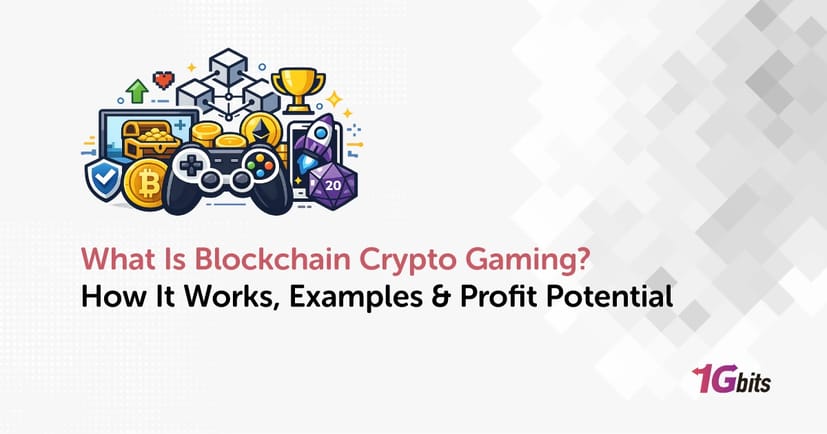
Imagine you have spent hours playing a popular game to obtain a legendary sword or a rare outfit. Now you decide to quit the game. In the traditional world, all that effort and those assets are buried inside the developer’s servers. But what if I told you that in the world of blockchain gaming, you truly own that sword and can convert it into real money? What would you say? In this article from 1GBITS, we are going to dive deep into the world of crypto games together. From basic concepts to technical details and ways to earn income, we will examine everything so you can understand exactly how this technology has shaken the entertainment industry.
What Is Blockchain Gaming (Blockchain Crypto Gaming)?
A blockchain game is essentially a video game that uses blockchain technology in its structure or management. The main difference from traditional games is that in conventional video games, all servers and assets are controlled by the developers, and players do not have legal ownership of items. In blockchain games, however, in-game assets are recorded on the blockchain as tokens or NFTs, and the player is the “true owner” of them, meaning they can keep, sell, or transfer them.
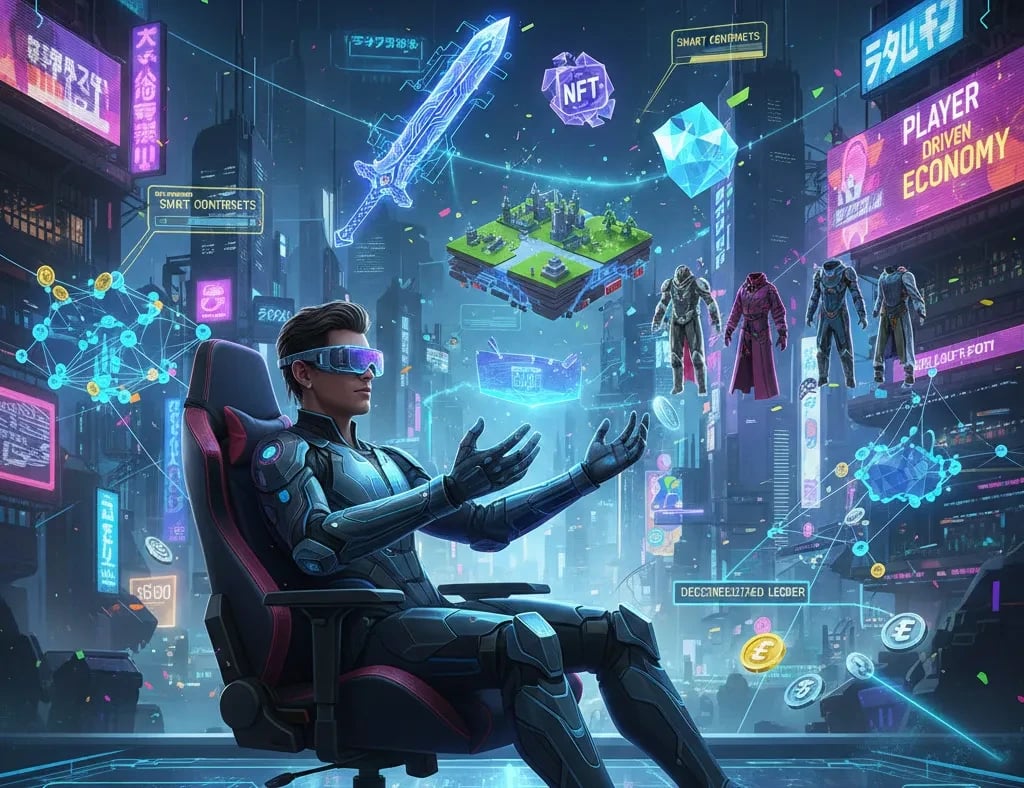
In simple terms, blockchain gaming means:
-
True ownership: Unlike old-school games, the assets you acquire in the game, such as weapons, land, or outfits, belong to you, not the developer.
-
Use of tokens and NFTs: These assets are usually defined as non-fungible tokens (NFTs) or native in-game tokens.
-
Decentralization: Game rules and transactions are managed by smart contracts, which minimize the possibility of cheating or unilateral changes by the company.
The term Blockchain Gaming Meaning essentially refers to the connection between the excitement of gaming and the security of a decentralized economy. Here, you are not just a player. You are part of the game’s economy.
Blockchain Gaming vs Traditional Gaming
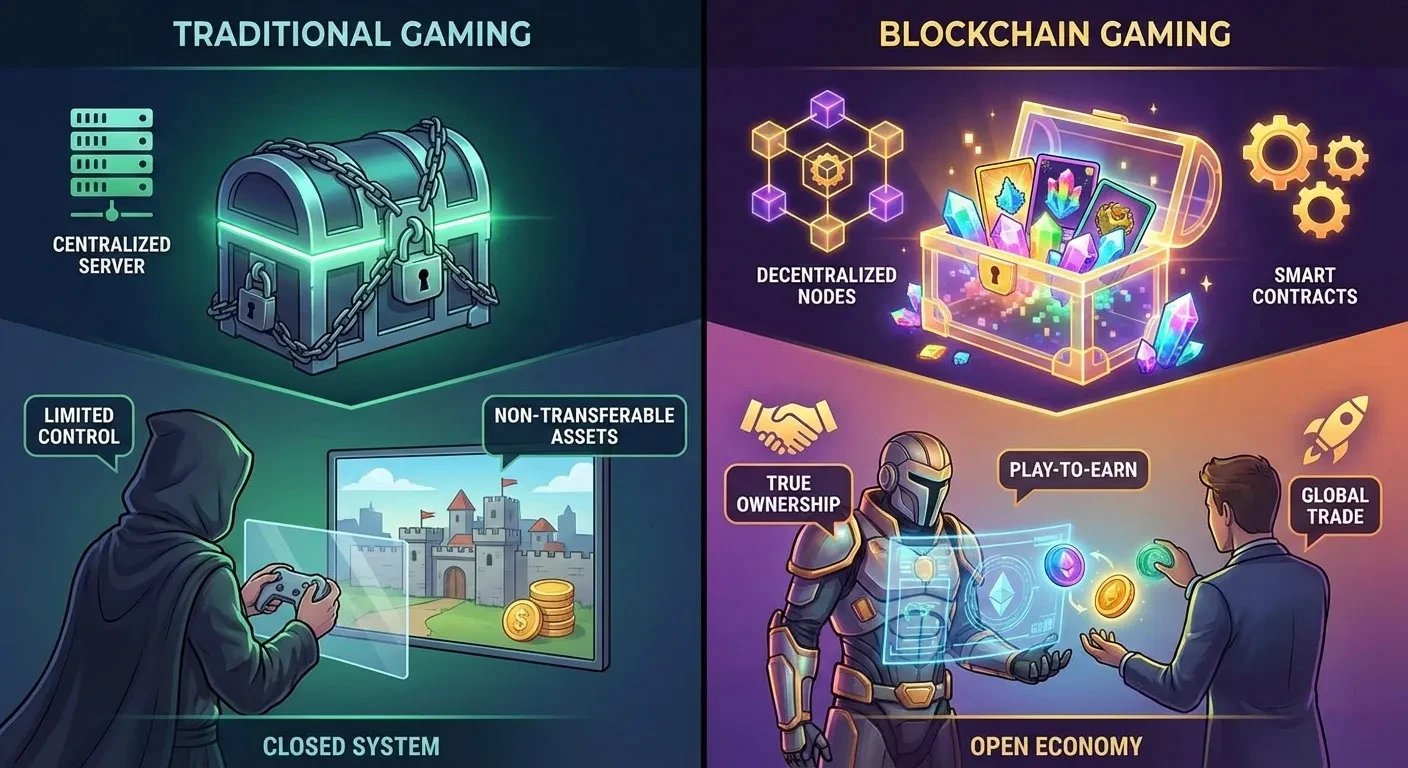
If I had to summarize the difference between the two in one sentence, I would say this: traditional gaming is a “closed system,” while blockchain gaming is an “open system.” In traditional games, you pay to enjoy the experience (Pay to Play), but in blockchain games, your time and effort gain economic value (Play and Earn).
|
Feature |
Traditional Games |
Blockchain Games |
|
Asset ownership |
Virtual and controlled by the developer |
Real ownership (token or NFT in the player’s wallet) |
|
Asset trading |
Limited (usually only within the game) |
Free and cross platform |
|
Transparency and security |
Lower (centralized servers) |
High (blockchain infrastructure) |
|
Economic structure |
Closed, dependent on in game purchases |
Open, Play to Earn and token based economy |
|
User experience |
No wallet required, closed environment |
Wallet required, integrated with blockchain |
|
Control over the game |
By the developer |
Participatory (DAO or player voting) |
One of the biggest problems that blockchain has solved is “centralization risk.” In 2023, large markets such as CS:GO skins experienced severe volatility due to centralized decisions. In the blockchain world, no company can decide overnight to reduce the value of your assets to zero, because the rules are recorded in smart contracts, and changing them requires consensus.
How Does Blockchain Gaming Work?
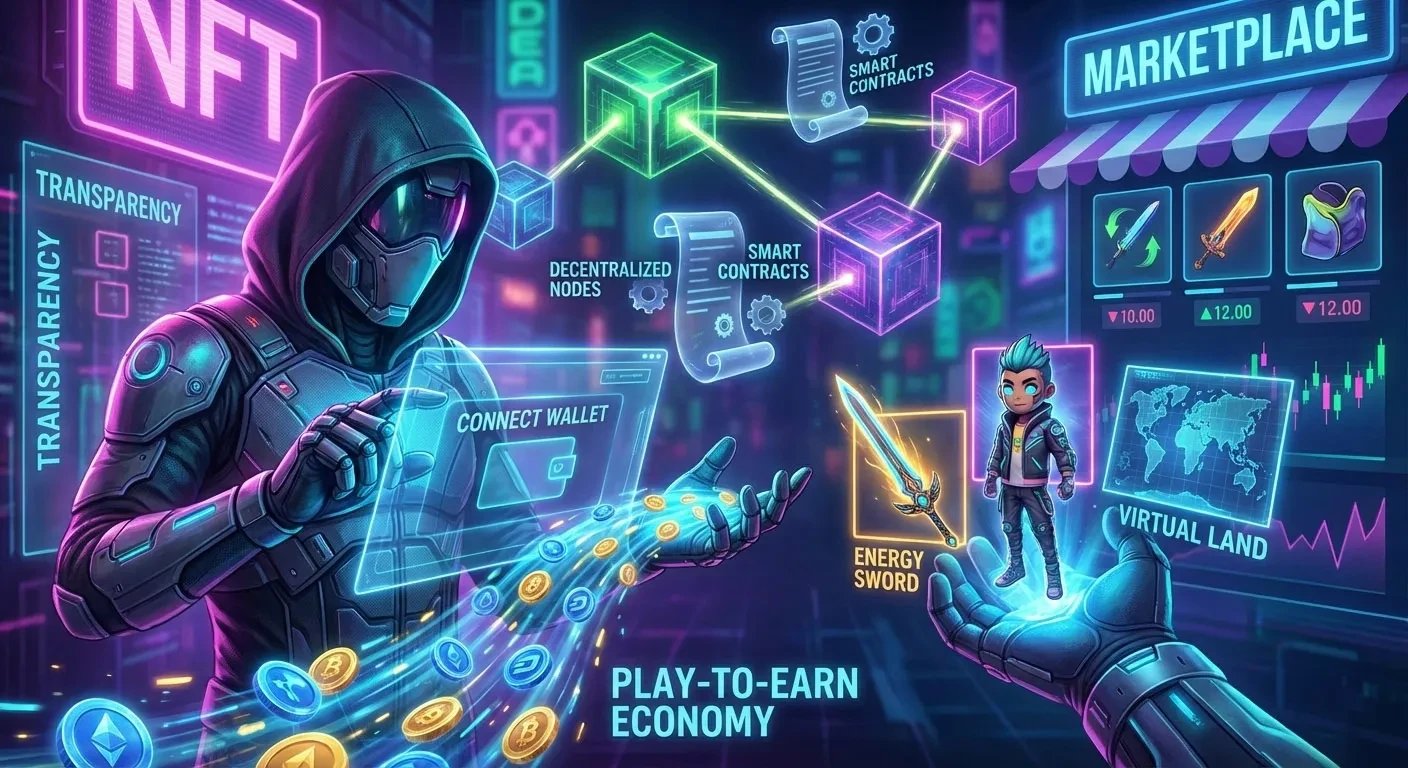
The core mechanism of these games is based on the interaction between the game’s user interface and a decentralized network, operating through several key components of blockchain technology:
-
Smart Contracts: The game logic and in game transactions are executed through smart contracts. These codes run automatically on the blockchain and record the outcomes. Creating and transferring items or determining game results happens without intermediaries or human intervention.
-
Tokenized Assets (NFTs): Items, characters, and virtual land are defined as NFTs. Each NFT is a unique digital asset with a specific owner recorded on the blockchain. The player can keep it, sell it, or trade it.
-
Cryptocurrency Rewards: In the Play to Earn model, players receive tokens by completing missions or winning in the game. These tokens are stored in a wallet and can later be sold or converted into currencies such as Tether or Bitcoin.
-
Wallet Selection and Network Connection: To carry out transactions, the player needs a crypto wallet. Games usually include a “connect wallet” option. One wallet can be used across multiple blockchain games.
-
Decentralized Marketplaces: Most games offer a secondary market for buying and selling NFTs. This marketplace can be internal or public, such as OpenSea. Recording transactions on the blockchain ensures transparency and prevents fraud.
The transaction flow in a complete cycle, from starting the game to receiving a reward, is as follows:
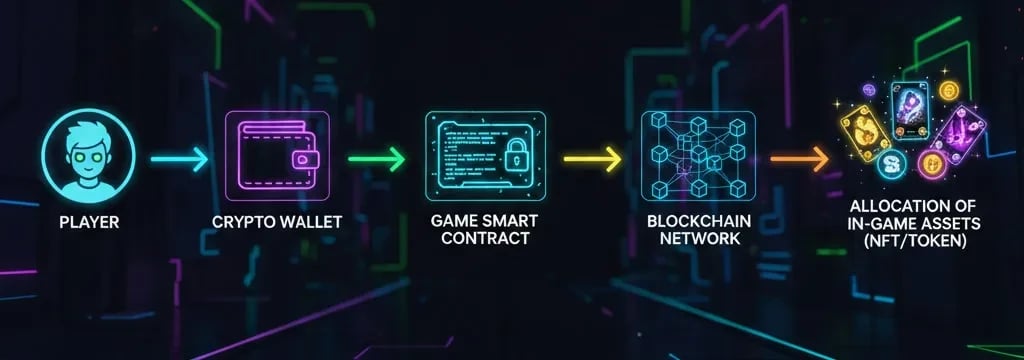
Player → Crypto Wallet → Game Smart Contract → Blockchain Network → Allocation of In Game Assets (NFT or Token)
Along this path, the player first enters the game using their wallet and submits transactions to the smart contracts. Each transaction is stored on the blockchain after confirmation, and as a result, the related asset is transferred to the player’s wallet or to the marketplace.
What Is a Blockchain Crypto Gaming App?
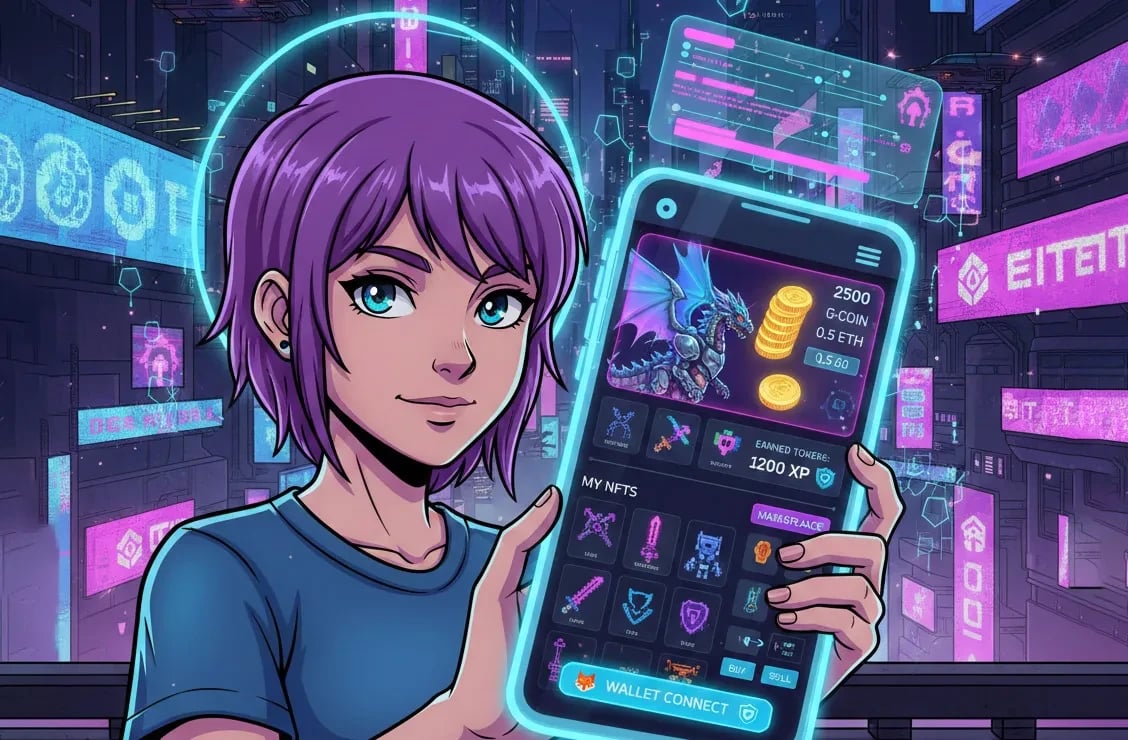
Today, many blockchain games are available as mobile applications or web based platforms. In these apps, logging in through wallets such as MetaMask or mobile wallets like Trust Wallet is usually supported, allowing players to enter the game environment within seconds after installation by connecting their wallet. In most of these apps, players earn tokens or NFTs by playing, fighting, or completing missions, and these rewards are stored in their accounts. These rewards can be used within the game for upgrades or special items, or even converted into fiat currency.
Telegram Mini Apps: The 2024 and 2025 Revolution
Perhaps the most interesting development for you is the emergence of Telegram mini apps. Games such as Hamster Kombat and Notcoin showed that a simple application inside a messenger can attract millions of users. These applications usually use the TON blockchain, and due to their simplicity, they are the best entry point for beginners into this space.
Inside these applications, you usually have access to the following:
-
Internal marketplace: For quick purchases of equipment.
-
Rewards section: Where you can view mined or earned tokens.
-
Direct exchange connection: For quickly converting earnings into other currencies.
In fact, mobile blockchain gaming apps are a combination of a traditional gaming experience and a crypto economy. The player both plays and earns income through crypto based rewards such as token collection.
Gaming Blockchain Projects and Companies
If you want to know where major investments are flowing, you need to look at the giants of this industry. In 2025, we are witnessing the formation of specialized studios with budgets comparable to AAA games. Some leading projects and companies in the blockchain gaming space include:
-
Axie Infinity: The first and most famous blockchain game, which has had over one million active users and has generated more than one billion dollars in NFT sales through Axie tokens. The AXS cryptocurrency of Axie Infinity is currently a popular digital asset.
-
The Sandbox: A three dimensional metaverse where players can buy and sell virtual land known as LAND tokens and use their creativity to build content.
-
Decentraland: An open source virtual reality platform built on Ethereum where users can purchase virtual land using the MANA token and build social spaces or generate income.
-
Gods Unchained: A digital card game in which all game cards are provided to players as NFTs. Users can trade their cards on secondary markets.
-
Illuvium: A high graphics open world role playing game where players collect digital creatures, while DeFi mechanisms such as staking are also designed for players.
In addition to these, traditional companies like Ubisoft and Square Enix are cautiously introducing NFTs into their major franchises. This means that in the near future, the difference between a blockchain game and a regular game will become less distinct, and blockchain will turn into the standard infrastructure for all games. For broader and more up-to-date lists, websites such as DappRadar or Cryptogaming regularly publish curated lists of the most popular games.
What Is GameFi in Blockchain Games?
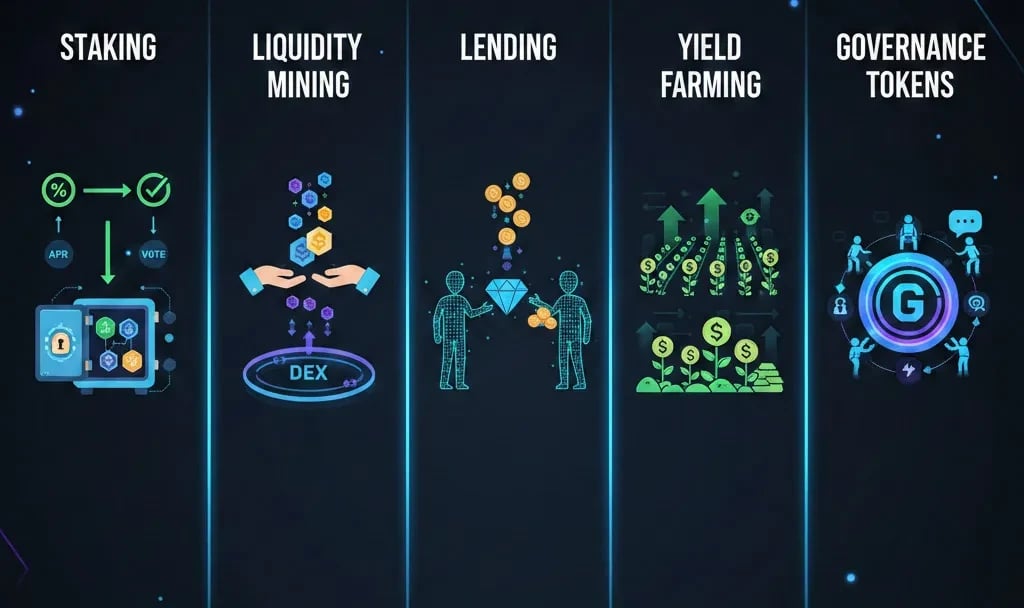
I always define GameFi as the “exciting combination of gaming and financial markets.” GameFi stands for “Game + Finance” and refers to strategies that integrate decentralized finance (DeFi) mechanisms into blockchain games. In GameFi, gameplay and the economy are intertwined. Users can participate in the financial system of a game in addition to playing it. For example:
-
Staking: You can lock the game’s cryptocurrency within the platform to receive annual returns or gain voting power in game related decisions.
-
Liquidity Mining: Players can earn rewards by providing game token pairs to decentralized exchanges.
-
Lending: If you own a valuable NFT but do not have time to play, you can rent it to other players and share in their profits.
-
Yield Farming: Blockchain game tokens may be placed into systems that offer higher returns, similar to deposits.
-
Governance Tokens: Some games reward users with governance tokens for participation or progress in the game. Holders of these tokens have the right to take part in game development decisions, such as voting on new features.
GameFi has given real meaning to the concept of a “circular economy” in games, where tokens constantly circulate among players, pools, and developers, helping preserve the project’s value. In short, GameFi allows players not only to profit from the appreciation of in game items and tokens, but also to earn passive income by using DeFi mechanisms such as staking or lending tokens.
How Do Players Earn Money in Blockchain Games?
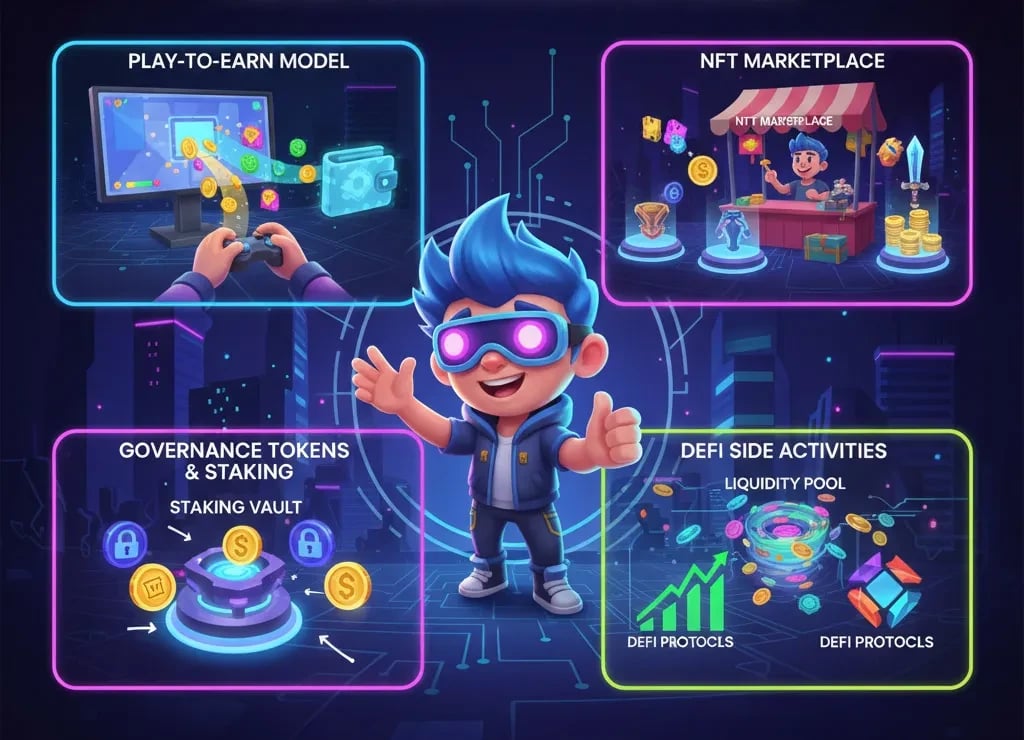
This is probably the part you have been waiting for the most. Earning income in this space goes beyond “just playing.” I have categorized the main methods for you so you know where to start.
1. Play to Earn Model
In this model, players receive tokens or NFTs by playing the game and achieving in game goals. These tokens are stored in the user’s wallet. If the token can be sold on crypto exchanges or NFT marketplaces, it can be converted into real money. For example, in Axie Infinity, players earn SLP and AXS tokens by winning battles or breeding Axie creatures, and these tokens are tradable on the market.
2. NFT Trading
Players can sell their rare items or characters as NFTs. For instance, if you obtain a special and rare item in a game, you can sell it on marketplaces such as OpenSea or on the in game exchange and receive its dollar equivalent.
3. Governance Tokens and Staking
Some games reward users with governance tokens. The user can hold these tokens or participate in governance processes and benefit from perks such as receiving more tokens. In addition, staking the main game tokens in different sections of the platform may generate returns.
4. DeFi Side Activities
Some games include DeFi elements. For example, users can place game tokens into systems outside the game to earn yields or participate in liquidity provision.
Is this profitable? Yes, but keep in mind that the crypto market is volatile. The price of a token you win today may change tomorrow. Therefore, always view it as a high risk investment. See the table below.
|
Income Strategy |
Risk Level |
Time Required |
Profit Potential |
|
Daily gameplay (Grinding) |
Low |
Very high |
Medium |
|
NFT investment |
High |
Low |
Very high |
|
Asset renting |
Low |
Very low |
Medium (passive income) |
|
Airdrop hunting |
Medium |
Medium |
Variable |
Overall, there is profit potential in blockchain gaming. According to reports, the market value of this sector was around 4.83 billion dollars in 2022 and is expected to grow significantly by 2030. However, the real winner is the one who, in addition to enjoying the game, consciously manages risks such as market volatility and regulations.
Is Blockchain Gaming Safe?
Blockchain games have both security advantages and risks. The decentralized and cryptographically secured structure of blockchain increases transparency and the immutability of transactions, but if smart contracts are vulnerable, there is a possibility of exploitation. For example, Axie Infinity was targeted by a major hack in 2022, showing that even well-known projects are not immune. In addition, the high volatility of token and NFT prices can quickly change the value of players’ assets.
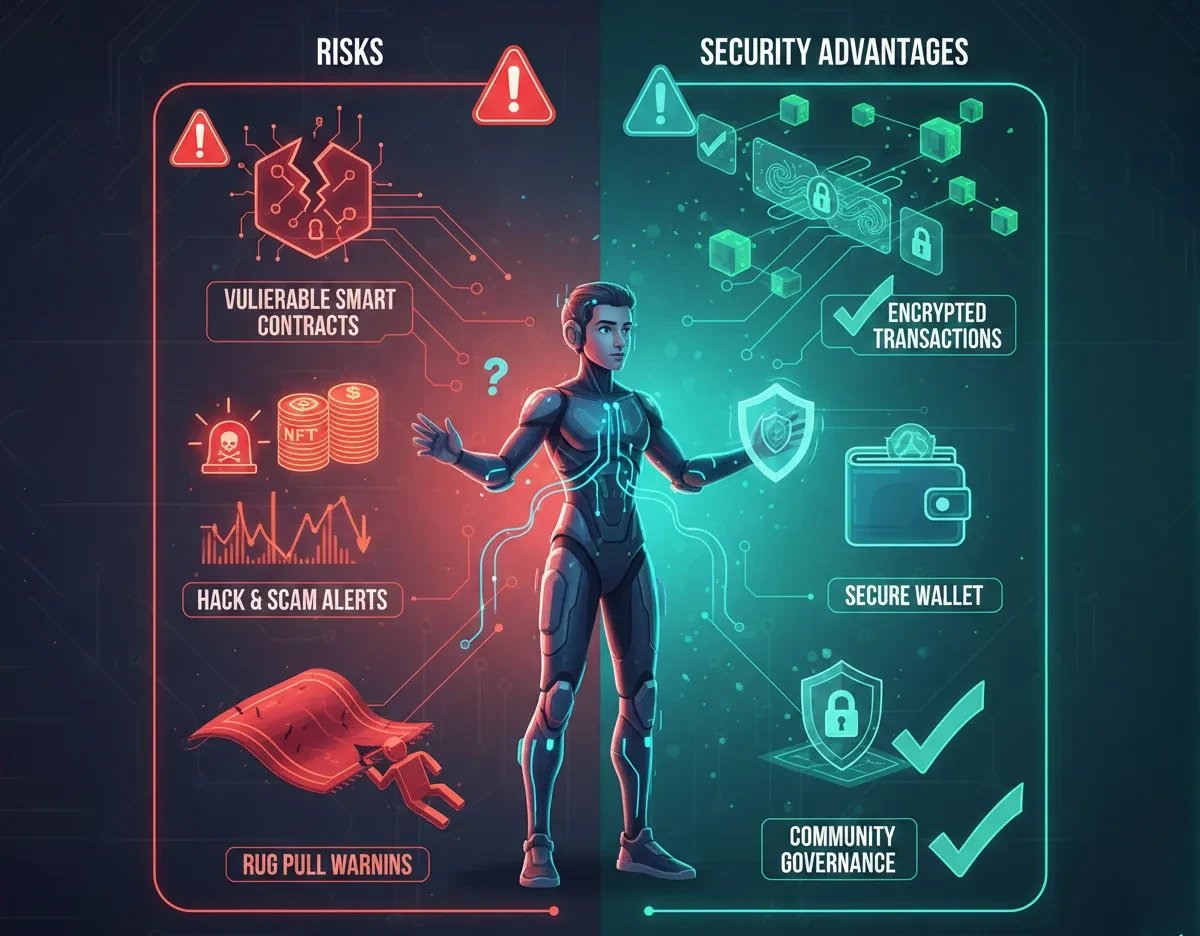
From a legal perspective, many countries still lack clear regulatory frameworks for cryptocurrencies and NFTs, and this uncertainty can affect participation or the ability to cash out earnings. Scam projects or so called rug pulls are also a serious risk. To reduce risk, check the credibility of the development team before joining any game, use secure wallets, and manage your investments carefully.
Blockchain Gaming Infrastructure Requirements
To run a blockchain game or host network nodes for a gaming ecosystem, you need resources that are not affected by other users. In addition, since these games are usually online multiplayer and process blockchain transactions in real time, the following servers and equipment must be considered.
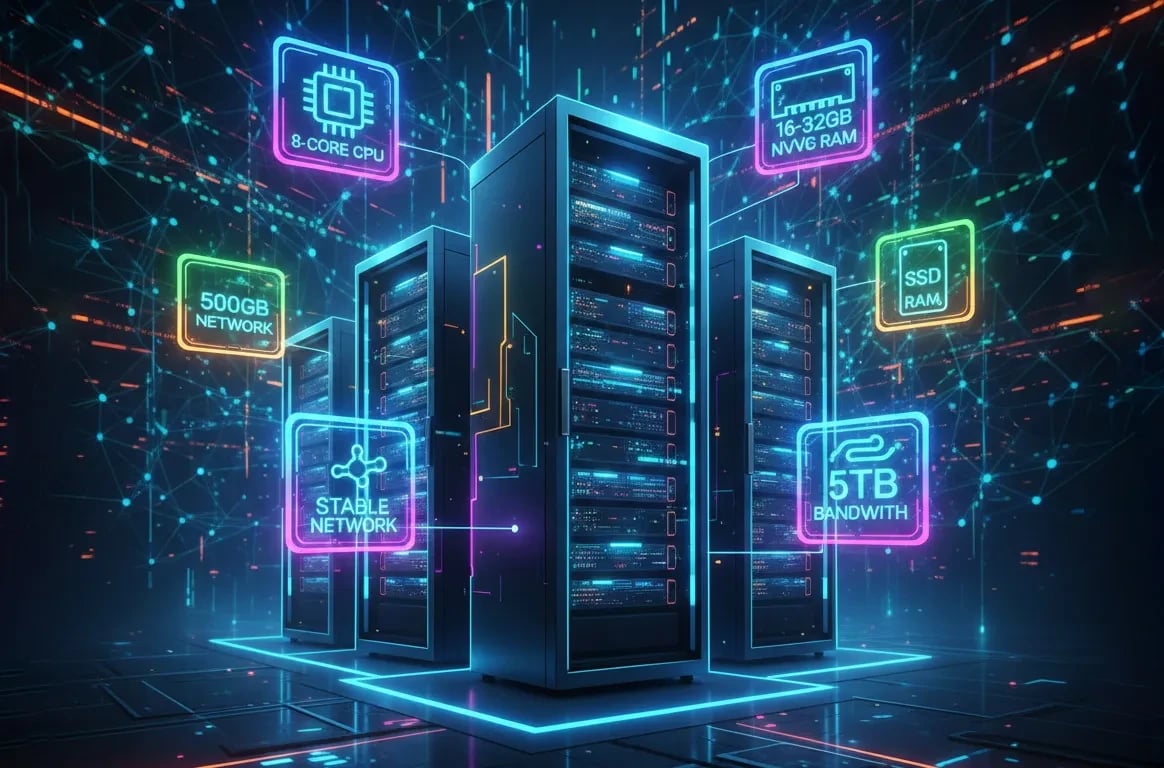
Recommended Technical Specifications for Hosting Game Nodes (2026)
Based on the standards of networks such as Solana or Polygon, which host large scale games, you need hardware with the following specifications:
|
Hardware Component |
Minimum Required Specification |
|
Processor (CPU) |
8 high frequency cores (3.5 GHz or higher) |
|
Memory (RAM) |
16 to 32 GB |
|
Storage |
500 GB NVMe SSD |
|
Network |
Stable 100 Mbps |
|
Monthly Bandwidth |
5 TB |
|
Operating System |
Ubuntu Server LTS |
In addition, choosing a data center that has no issues with crypto regulations and offers network uptime above 99.9 percent is critical to avoid penalties within the network, such as slashing. Using gaming hosting services, such as VPS or dedicated servers, is highly effective since they are designed to meet the needs of online games.
If you want a deeper technical breakdown of server structure and performance considerations, read What Is Game VPS Hosting to understand how virtualized environments support blockchain gaming workloads. And if you are comparing options before deployment, check out Best Game VPS Hosting Providers to evaluate performance, uptime guarantees, and scalability features side by side.
Ready to Compete in GameFi?
We have reached the end of this article, and now you understand the major transformation blockchain gaming has brought to digital ownership and the entertainment economy. We have moved from a world where we were merely consumers to one where players are partners and owners of the game. Whether you are planning to launch your own game project or are a professional gamer seeking stability and speed in connectivity, remember that infrastructure is the beating heart of your game. That is why at 1GBITS, we offer Game VPS Hosting and Game Dedicated Server services, providing exactly the infrastructure you need to compete in this fast-moving market.


![What Is Cold Data Storage? ❄️ [2026 Guide]](https://1gbits.com/cdn-cgi/image//https://s3.1gbits.com/blog/2026/02/what-is-cold-data-storage-750xAuto.webp "What Is Cold Data Storage? ❄️ [2026 Guide]")
![What Is Virtual Desktop Infrastructure? 🖥️ [VDI Explained]](https://1gbits.com/cdn-cgi/image//https://s3.1gbits.com/blog/2026/02/what-is-virtual-desktop-infrastructure-vdi-750xAuto.webp "What Is Virtual Desktop Infrastructure? 🖥️ [VDI Explained]")