
What Does DNS_PROBE_FINISHED_NXDOMAIN Mean?
You typed a URL, hit enter, and Chrome slapped you with DNS_PROBE_FINISHED_NXDOMAIN. Annoying, yeah. But the message itself is actually pretty specific once you decode it.
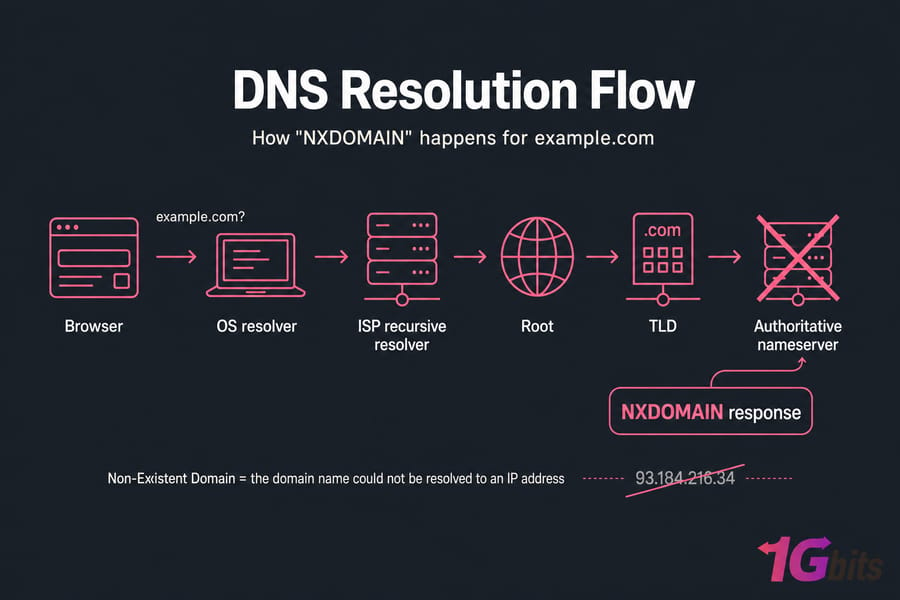
NXDOMAIN stands for "Non-Existent Domain." When your browser fires off a DNS lookup and the resolver comes back saying "I checked, that name doesn't exist anywhere I can see" — that's NXDOMAIN. Chrome wraps the result in its own "DNS_PROBE_FINISHED" wording, but the meaning is the same: the domain name couldn't be resolved to an IP address. It's a reminder that even in the digital age, glitches can arise — but understanding the error is the first step to fixing it.
NXDOMAIN meaning in plain English
Think of DNS as the internet's phonebook. You ask for example.com, and a chain of servers translates that into an IP like 93.184.216.34. NXDOMAIN means somewhere in that chain, an authoritative server replied, "There's no such entry." The meaning behind the error becomes clearer when dissected: "DNS_PROBE" hints at the Domain Name System probing for resolution, "FINISHED" suggests the probing process reached its conclusion, and "NXDOMAIN" confirms the domain doesn't exist in DNS records.
That could mean the domain genuinely doesn't exist (typo, expired registration), or — and this trips up a lot of people — your local cache or DNS server is giving you a stale or wrong answer. This scenario often mirrors similar issues when a browser reports a generic server IP address could not be found error, indicating that the fundamental link between domain name data and network host location mapping has collapsed.
Why browsers show this error
Chrome, Edge, Brave, and other Chromium-based browsers run their own DNS probes on top of the OS resolver. When that probe fails with an NXDOMAIN response, you get this exact error code. Firefox and Safari word it differently but the underlying cause is the same. Whether you're on Chrome, Android, macOS, or any other platform, this error can throw a wrench into your browsing experience.
NXDOMAIN vs ERR_NAME_NOT_RESOLVED vs BAD_CONFIG
People mix these up constantly. Quick distinction:
- DNS_PROBE_FINISHED_NXDOMAIN — the DNS query completed, and the answer was "this domain does not exist."
- ERR_NAME_NOT_RESOLVED — the resolver couldn't finish the lookup at all (timeout, no route, broken resolver).
- DNS_PROBE_FINISHED_BAD_CONFIG — your local DNS configuration is broken (wrong server addresses, conflicting entries).
Same family, different root causes. The fixes overlap, but knowing which one you're staring at saves time.
| Error Code | Primary Root Cause | Recommended Core Solution |
| DNS_PROBE_FINISHED_NXDOMAIN | Domain does not exist or cannot map to any public IP address | Flush system DNS cache, verify URL spelling, or modify custom nameservers |
| ERR_NAME_NOT_RESOLVED | The local or gateway device failed to reach an active DNS host completely | Check router physical configurations, restart local interfaces, verify client connection |
| DNS_PROBE_FINISHED_BAD_CONFIG | Misconfigured local network settings or bad default gateway routing entries | Reset network TCP/IP stack variables to default parameters or change active server profiles |
What Causes DNS_PROBE_FINISHED_NXDOMAIN?
In my experience supporting hosting customers, this error comes from one of seven places. Walk through them in order — the first ones are the most common.
Typo in the domain or a broken URL
Sounds dumb, but check it first. gogle.com doesn't exist. Neither does facebok.com. Some browser autocomplete suggestions are also stale and point to dead subdomains.
Corrupted DNS cache
Your OS and browser cache DNS answers to speed things up. If a cached entry goes stale — say the site moved IPs, or there was a brief DNS hiccup — you'll keep getting the old, now-invalid answer until you flush it.
DNS server or ISP resolver issues
The recursive resolver your ISP gave you (via DHCP) sometimes returns garbage. ISP DNS is notorious for caching issues and the occasional outage. Switching to Cloudflare or Google often fixes it instantly.
Wrong DNS settings on your device or router
Maybe you set a custom DNS server months ago and forgot. Maybe your router was reconfigured. Either way, if the DNS your machine is using doesn't work, neither does your browsing.
VPN, proxy, firewall, or antivirus conflicts
Corporate VPNs are big offenders here. So is Zscaler. So are aggressive antivirus suites that hijack DNS traffic for "protection." Disable them one at a time to see which one's the culprit.
Expired domain or bad DNS records
If you're the site owner — or trying to reach one specific site — the domain might have lapsed. Or the A record could be missing. Or a botched migration left the nameservers pointing at nothing.
DNS propagation after recent changes
Changed your nameservers in the last 24 hours? Switched to Cloudflare? Welcome to propagation purgatory. It typically settles within a few hours but can stretch to 48 in stubborn cases.
How to Tell Whether the Problem Is on Your Device or the Website
Before you start randomly flushing caches, do a 60-second triage. It'll save you an hour of wasted clicking.
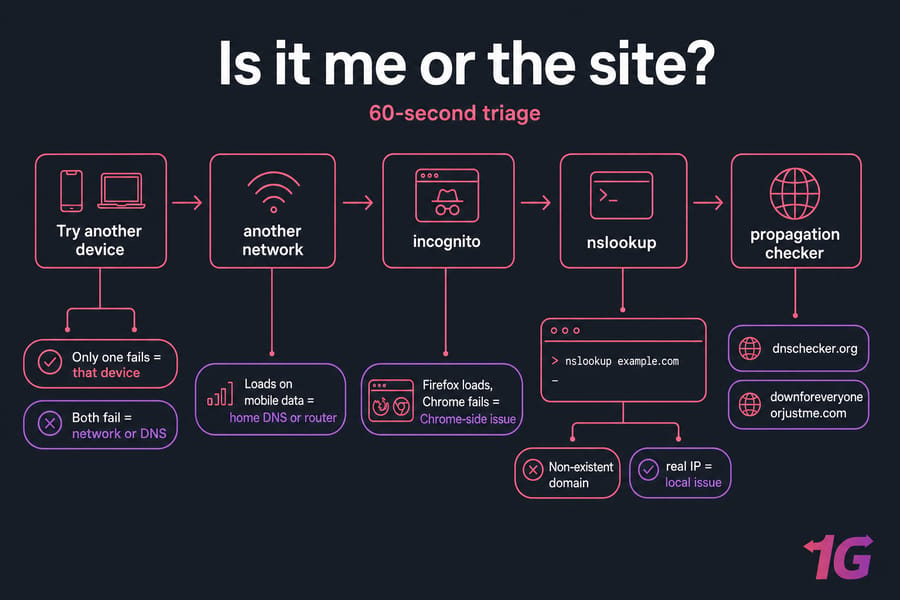
- Try another browser or incognito mode. If Firefox loads it but Chrome doesn't, it's a Chrome-side issue (cache, extensions, Secure DNS).
- Test on another device. Phone on Wi-Fi, laptop on the same Wi-Fi. If both fail, it's network or DNS. If only one fails, it's that device.
- Switch off Wi-Fi and use mobile data. Different ISP, different resolver. If the site loads on cellular, your home DNS or router is the problem.
- Check if the site is down for everyone. Plug the URL into
downforeveryoneorjustme.comor similar. - Run nslookup or dig. Open a terminal and try
nslookup example.comordig example.com. If you get "Non-existent domain," the DNS chain genuinely doesn't have a record. If you get a real IP but Chrome still fails, it's local. - Use a DNS propagation checker like dnschecker.org to see what resolvers around the world return for the domain.
Once you know whether you're chasing a local issue or a website issue, the right fix gets obvious fast. Whether you run applications on a local desktop or manage cloud-scale apps on a stable Cloud VPS platform, understanding connectivity bottlenecks is crucial to keeping your services accessible online.
How to Fix DNS_PROBE_FINISHED_NXDOMAIN: Step by Step
Here's the universal fix list. Start at step 1 and stop when the site loads.
1. Check the URL for typos
Re-type the address by hand instead of trusting autocomplete. Watch for sneaky characters like l vs 1 or rn vs m.
2. Restart your router and device
Pull the router's power for 30 seconds. Reboot your machine. This clears the router's resolver cache and any half-dead network state. Cliché, sure — but it works often enough that it's step two for a reason.
3. Flush your DNS cache
This dumps the stale entries your OS is hanging onto. Commands differ per OS — see the OS-specific sections below. For an extensive deep-dive on managing these parameters, consult our guide on how to flush DNS logs across various system variants.
4. Release and renew your IP address
On Windows: ipconfig /release then ipconfig /renew. On macOS, toggle Wi-Fi off/on or renew the DHCP lease in Network settings. To fully comprehend how network routers auto-assign these endpoints seamlessly, read our article on what is DHCP and its importance in modern architectures.
5. Change your DNS server
Swap your ISP's DNS for Cloudflare (1.1.1.1) or Google (8.8.8.8). This single change fixes the error more often than anything else on the list. For a comprehensive selection of premium performance nodes, consult our index of the list of best DNS servers available globally. Users can also look up a specialized how to change DNS server guide to permanently swap out default carrier nameservers.
6. Check the hosts file
Malware and old dev work sometimes leave entries in your hosts file that hijack domains.
- Windows:
C:\Windows\System32\drivers\etc\hosts - macOS / Linux:
/etc/hosts
Open it in a text editor (as admin/root) and remove any lines pointing the affected domain somewhere it shouldn't be.
7. Disable VPN, proxy, or antivirus temporarily
Kill the VPN. Switch off any proxy in your system settings. Pause antivirus DNS protection. Reload the page. If it works, you've found your suspect. If you find your VPN is at fault, exploring a dedicated what is a VPN blueprint can help you reconfigure split-tunneling policies to prevent DNS leaks.
8. Reset browser settings and extensions
Disable extensions in bulk, especially ad blockers, security extensions, and anything VPN-related. If the site loads with extensions off, re-enable them one by one until you find the offender.
9. Clear Chrome host cache
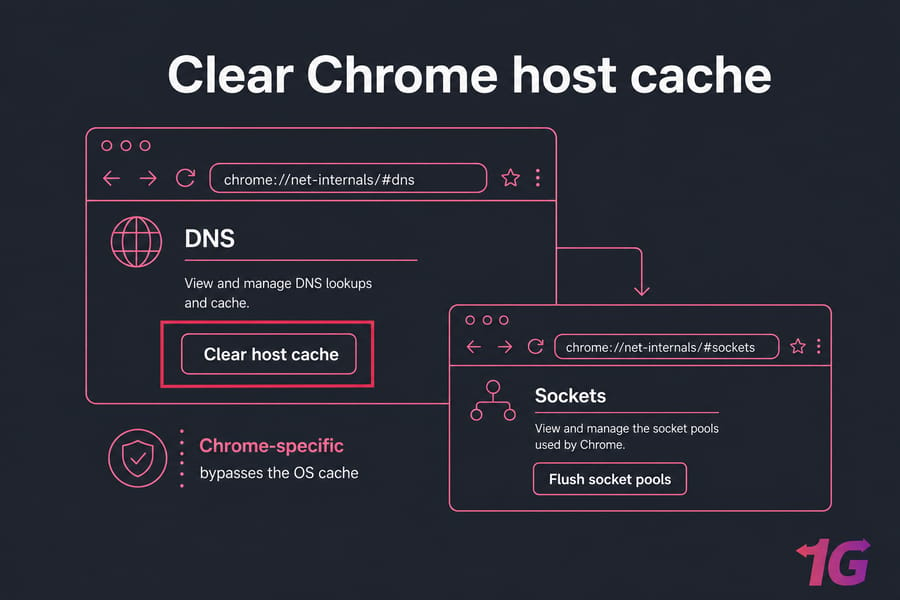
Go to chrome://net-internals/#dns and hit "Clear host cache." Then go to chrome://net-internals/#sockets and click "Flush socket pools." This is Chrome-specific and bypasses the OS cache entirely.
10. Reset network settings
Last-resort nuke option. On Windows, run netsh int ip reset and netsh winsock reset. On phones, look for "Reset network settings" in your settings app. Note: this wipes saved Wi-Fi passwords.
11. Contact your ISP or hosting provider
If nothing else works and the issue affects multiple sites, call your ISP. If it's one specific site you own or manage, talk to your hosting provider or domain registrar.
Fix DNS_PROBE_FINISHED_NXDOMAIN on Windows
Tested on Windows 10 and Windows 11. Same commands, slightly different UI.
Flush DNS with Command Prompt
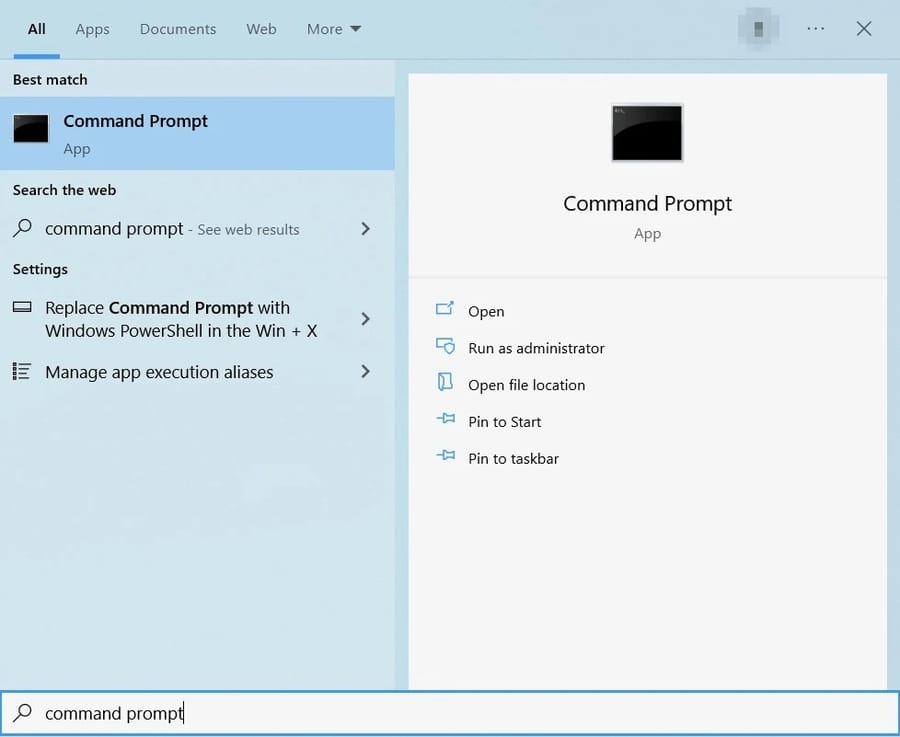
Open Command Prompt as administrator and run:
ipconfig /flushdns
ipconfig /registerdns
ipconfig /displaydns
The first wipes the cache. The third lets you confirm it's empty (or see what's still in there).
Renew IP address
ipconfig /release
ipconfig /renew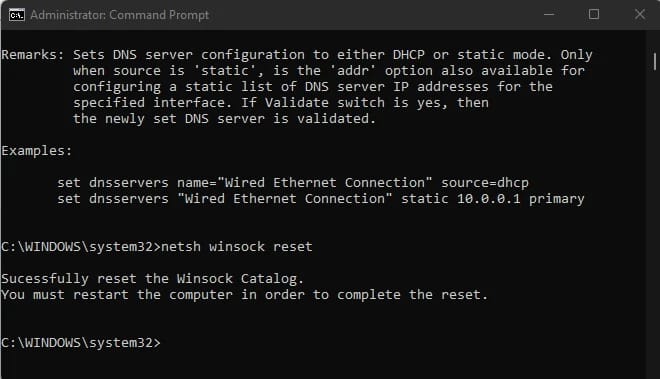
Change DNS to Google or Cloudflare
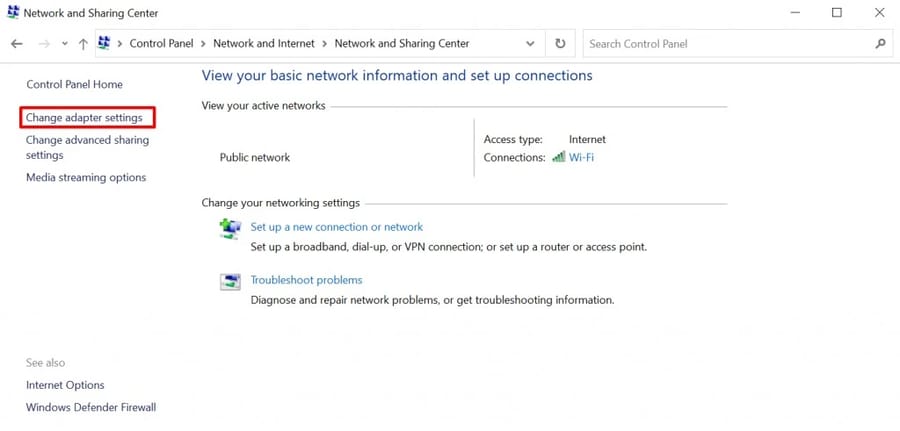
Settings → Network & Internet → your active connection → IP assignment → Edit → switch to Manual → enable IPv4 → fill in:
- Preferred:
1.1.1.1(Cloudflare) or8.8.8.8(Google) - Alternate:
1.0.0.1or8.8.4.4
You can also refer to our guide on how to change DNS in Windows for a detailed walkthrough.
Reset TCP/IP and Winsock
netsh int ip reset
netsh winsock reset
ipconfig /flushdns
Reboot after. This fixes a surprising number of weird networking gremlins.
Fix DNS_PROBE_FINISHED_NXDOMAIN on macOS
Flush DNS cache on recent macOS versions
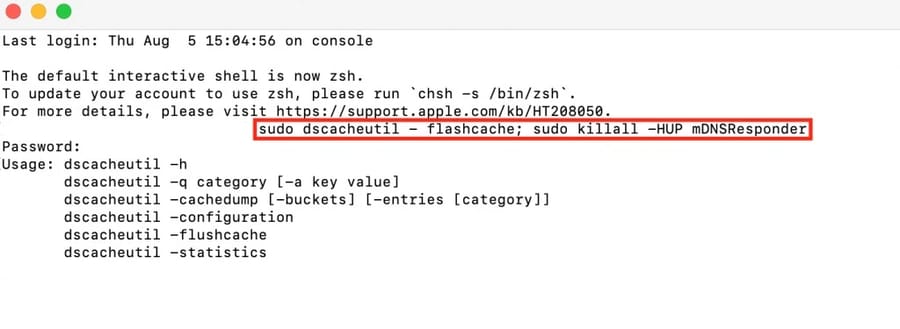
Open Terminal and run:
sudo dscacheutil -flushcache; sudo killall -HUP mDNSResponderWorks on Ventura, Sonoma, and Sequoia. You'll need to enter your admin password. No output means it worked.
Renew DHCP lease
System Settings → Network → Wi-Fi → Details → TCP/IP → click "Renew DHCP Lease."
Change DNS servers in Network settings
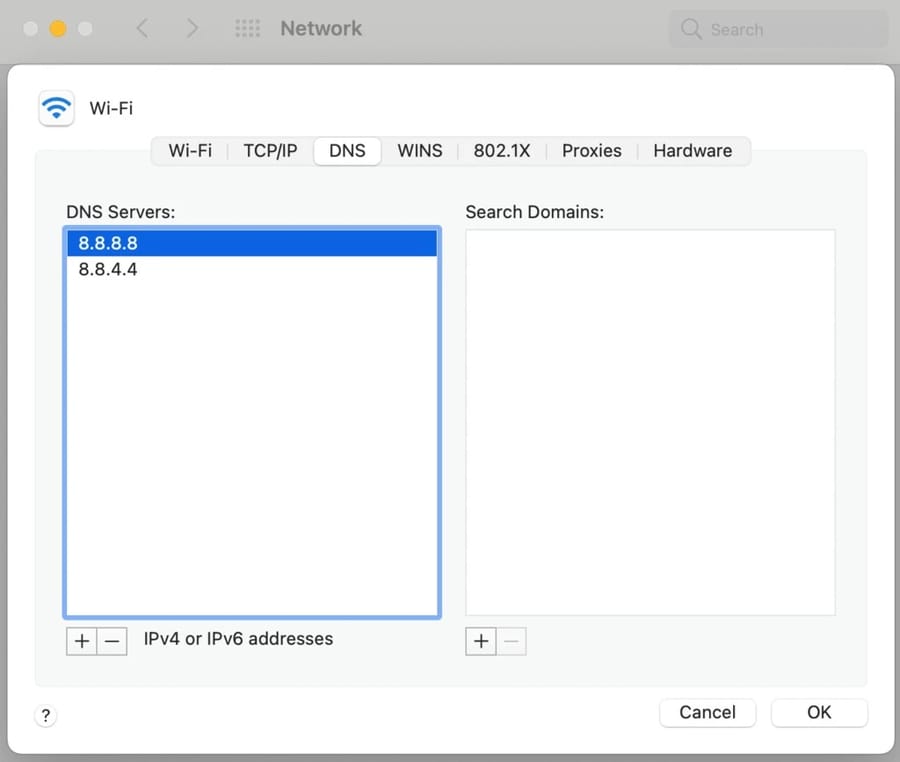
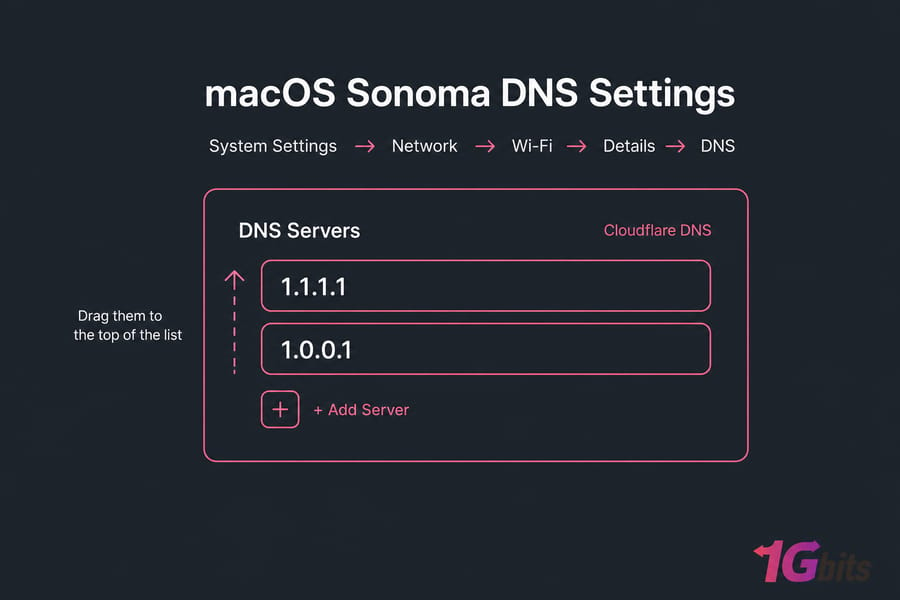
System Settings → Network → Wi-Fi → Details → DNS → click the + button and add 1.1.1.1 and 1.0.0.1. Drag them to the top of the list so they're used first.
Fix DNS_PROBE_FINISHED_NXDOMAIN on Android
Restart Wi-Fi/mobile connection
Toggle airplane mode on for 10 seconds, then off. This forces the device to re-pull DNS from DHCP.
Change DNS on Wi-Fi
Settings → Network & Internet → Internet → tap your Wi-Fi network → gear icon → IP settings → Static. Add Cloudflare or Google DNS under "DNS 1" and "DNS 2." Or, easier — use Private DNS:
- Settings → Network & Internet → Private DNS → "Private DNS provider hostname" → enter
one.one.one.one(Cloudflare) ordns.google.
Clear Chrome cache
Chrome (mobile) → ⋮ menu → Settings → Privacy and Security → Clear browsing data → check "Cached images and files" and "Cookies and site data" → Clear data. For quick visual navigation inside various alternative app engines, review our walkthrough on how to clear cache from browsers seamlessly.
Reset network settings
Settings → System → Reset options → Reset Wi-Fi, mobile & Bluetooth. You'll lose saved Wi-Fi passwords, so know them before you do this.
Fix DNS_PROBE_FINISHED_NXDOMAIN on iPhone and iPad
Settings → Wi-Fi → tap the (i) next to your network → Configure DNS → Manual → Add Server → enter 1.1.1.1 and 8.8.8.8 → Save. For a deeper reset: Settings → General → Transfer or Reset iPhone → Reset → Reset Network Settings.
Fix DNS_PROBE_FINISHED_NXDOMAIN in Chrome, Edge, Firefox, and Safari
Chrome
Chrome's the main place this error shows up, so it gets the most attention:
chrome://net-internals/#dns→ Clear host cachechrome://net-internals/#sockets→ Flush socket pools- Settings → Privacy and Security → Security → toggle Use Secure DNS off temporarily
- Settings → Privacy and Security → Clear browsing data → "All time" → cached images and files
- Disable extensions:
chrome://extensions
Heads up — Chrome's UI shifts between versions. If your menu paths look different, the chrome:// URLs still work the same.
Microsoft Edge
Edge is Chromium-based, so the same tricks apply: edge://net-internals/#dns for host cache, and Settings → Privacy, Search, and Services → Security → toggle off "Use secure DNS."
Firefox
Firefox uses its own resolver settings. Type about:preferences#privacy → scroll to "DNS over HTTPS" → set to Off temporarily. Also clear cache via Settings → Privacy & Security → Cookies and Site Data → Clear Data.
Safari
Safari uses the macOS DNS resolver, so flush the system cache (see macOS section). Then Safari → Settings → Privacy → Manage Website Data → Remove All. If you've got the Develop menu enabled, Develop → Empty Caches.
Website Owner Checklist: If Your Visitors See This Error
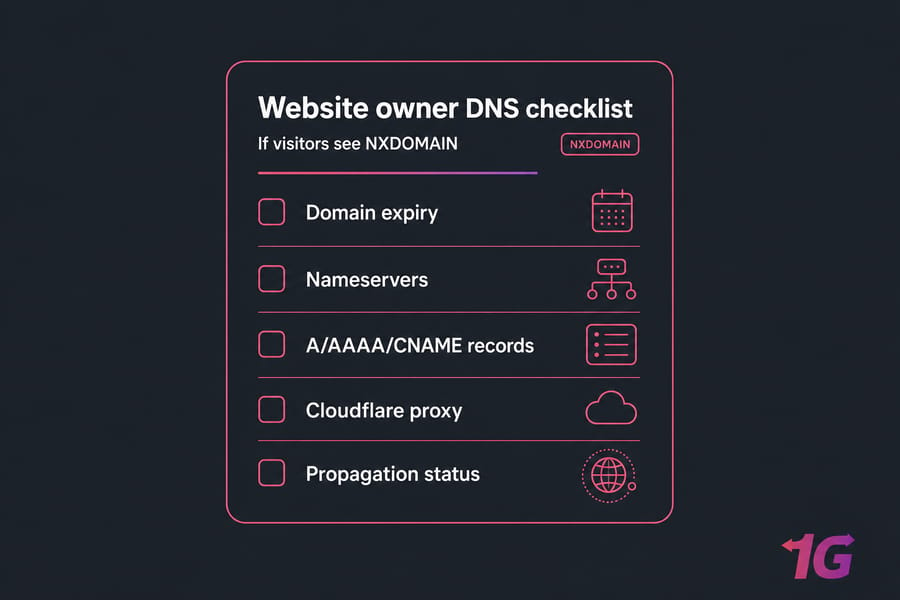
Now flip the perspective. If your site is the one throwing NXDOMAIN for visitors, the problem is server-side. Here's what to check, in order.
Check domain expiration
Sounds obvious. Happens constantly. Log into your registrar (Namecheap, GoDaddy, Cloudflare Registrar, whoever) and confirm the domain is active and not in a redemption period. You can also run a WHOIS lookup to confirm the expiration date publicly.
Verify nameservers
At your registrar, check the nameservers point at your actual DNS host. If you're using Cloudflare DNS but the registrar still shows the old hosting nameservers, requests are going to the wrong place — and the old place may answer NXDOMAIN. For users hosting applications on virtual machines, configuring an optimized Windows Server DNS structure or reliable public upstream zones can prevent visitors from ever facing this roadblock.
Review A, AAAA, CNAME, and NS records
Log into your DNS provider and confirm:
- A record for the apex (@) pointing to your server's IPv4
- AAAA record if you serve IPv6
- CNAME for
www(or an A record, depending on your setup) - NS records matching what's at the registrar
- SOA record intact (usually auto-generated)
Test from a terminal:
dig yourdomain.com A
dig yourdomain.com NS
dig www.yourdomain.com
Check Cloudflare or CDN settings
Common Cloudflare gotchas: orange-cloud proxying on a record that needs to be DNS-only, or a subdomain CNAME pointing at a deleted origin. If you recently moved through Cloudflare, double-check that records weren't dropped during import. Admin users must ensure that their public resource values are correctly synchronized within their Cloudflare dashboard to prevent local lookups from breaking.
Confirm DNS propagation after changes
Edited records in the last day? Run them through a propagation checker. TTL values matter — a record with a 24-hour TTL takes longer to refresh globally than one set to 300 seconds.
Fix common WordPress migration issues
After a host migration, WordPress sometimes ends up with mismatched site URLs. If WP_HOME and WP_SITEURL in wp-config.php point at the old domain (or an IP), and your visitors are hitting a domain that no longer resolves there, you'll get NXDOMAIN-style behavior in places. Fix the URLs in the database via WP-CLI or phpMyAdmin. For administrators running high-traffic corporate blogs, deploying websites on a premium, fully controlled environment like Windows VPS hosting delivers superior baseline resource guarantees and administrative capabilities to manage local hostnames reliably.
Best Public DNS Servers to Try
| Provider | Primary | Secondary | Best for |
| Cloudflare | 1.1.1.1 | 1.0.0.1 | Speed and privacy (no logging) |
| Google Public DNS | 8.8.8.8 | 8.8.4.4 | Reliability, broad compatibility |
| Quad9 | 9.9.9.9 | 149.112.112.112 | Security-focused (blocks malicious domains) |
| OpenDNS | 208.67.222.222 | 208.67.220.220 | Family filtering, parental controls |
Personally, I run Cloudflare on my home router and Quad9 on my laptop. Cloudflare's been the fastest in my measurements, and the no-log policy is genuinely solid. Google's the safest bet if you want pure reliability.
When changing DNS will not help
If the domain is actually expired, or its nameservers genuinely don't exist, switching your resolver won't matter. Every public DNS will return the same NXDOMAIN. That's your signal the problem is server-side, not yours. You can also explore Free Domain Name Server options to understand alternative DNS setups.
Advanced Diagnostics: Pro Tips & Troubleshooting Tools
For systems engineers, cloud webmasters, or tech power users looking to quickly rule out upstream name issues versus local machine cache problems, utilizing built-in command utilities is highly recommended:
- The Nslookup Tool: Open your command console interface and execute the lookup command to instantly poll external root clusters directly. For instance, testing a domain via alternative zones isolates bad local ISP performance profiles right away.
- The Dig Command: For Linux and macOS environments, utilizing advanced terminal reporting binaries yields precise query feedback flags (such as explicit status codes like NOERROR, NXDOMAIN, or SERVFAIL). Webmasters running services on remote nodes can follow an instructions guide on how to change Linux DNS settings to safely ensure system-wide lookup stability.
- Network Interface Validation: Always ensure that your hardware parameters or local virtual server instances are mapped to reliable public primary systems rather than dead legacy loopback paths. To systematically diagnose whether the local operating system interface can reach external upstream servers at all, users can master the ifconfig command in Linux to check active network interface states directly. If you run a custom enterprise deployment or VPS node, you can also check our instructions on how to set a static IP on Ubuntu server desktop configurations to bypass DHCP auto-lease dynamics entirely.
Common Mistakes to Avoid When Fixing DNS Issues
When running through standard diagnostic steps to remove connectivity warnings, try to bypass these frequent pitfalls:
- Overlooking URL Spelling Errors: Before modifying advanced operating system registry parameters or flushing gateways, verify that typos aren't triggering the non-existent response globally.
- Permanently Disabling Network Security Elements: While turning off active firewalls or security suites can isolate deep routing conflicts, permanently leaving software protection items disabled leaves systems exposed. Always re-enable security items after pinpointing issues.
- Ignoring Local Machine Restarts: Simply renewing DHCP leases without cycling the network layer handles may fail to clear memory-locked browser application cache hooks.
When to Contact Your ISP, Hosting Provider, or Registrar
- ISP: if multiple unrelated sites fail on your home connection but work fine on mobile data.
- Hosting provider: if you own the site and the records look right but visitors still hit errors. For comprehensive server setups, a dedicated server or Unmanaged VPS ensures maximum flexibility and comprehensive access over all upstream configurations.
- Registrar: if the domain shows weird WHOIS status (clientHold, pendingDelete) or expiration disputes.
Have your domain name, the exact error, and the output of dig yourdomain.com ready when you contact them. Saves both of you about 20 minutes.
Conclusion
The DNS_PROBE_FINISHED_NXDOMAIN error is a frustrating hurdle that can disrupt your internet browsing experience. It occurs when your browser is unable to resolve a domain name to an IP address, usually due to DNS issues. Despite its technical nature, resolving this error is often straightforward and can be achieved through a series of troubleshooting steps.
One of the simplest ways to address the error is to flush your DNS cache this clears out any outdated or corrupted DNS data. Changing your DNS server settings to a reliable public provider like Cloudflare or Google can also resolve the issue instantly. Additionally, checking your computer's hosts file for incorrect entries, disabling VPN or antivirus software temporarily, and ensuring your internet connection is stable can all help isolate and fix the problem. Resolving network mishaps is much simpler once you grasp the foundational principles our guide on what is an IP address forms the baseline for all core routing systems.
Whether you're an everyday user or a website owner managing your own infrastructure, understanding the difference between local device issues and server-side DNS problems is the key to fast resolution. By following the steps outlined in this guide from the universal fix list to platform-specific instructions for Windows, macOS, Android, and iOS — you can quickly resolve the error and get back to enjoying a seamless browsing experience.

Leave A Comment